RESOURCE

Blog

VANTAGE LOGISTICS – STRONG IN SPIRIT, CONNECTED WITH CARE, OVERCOMING THE STORM TOGETHER

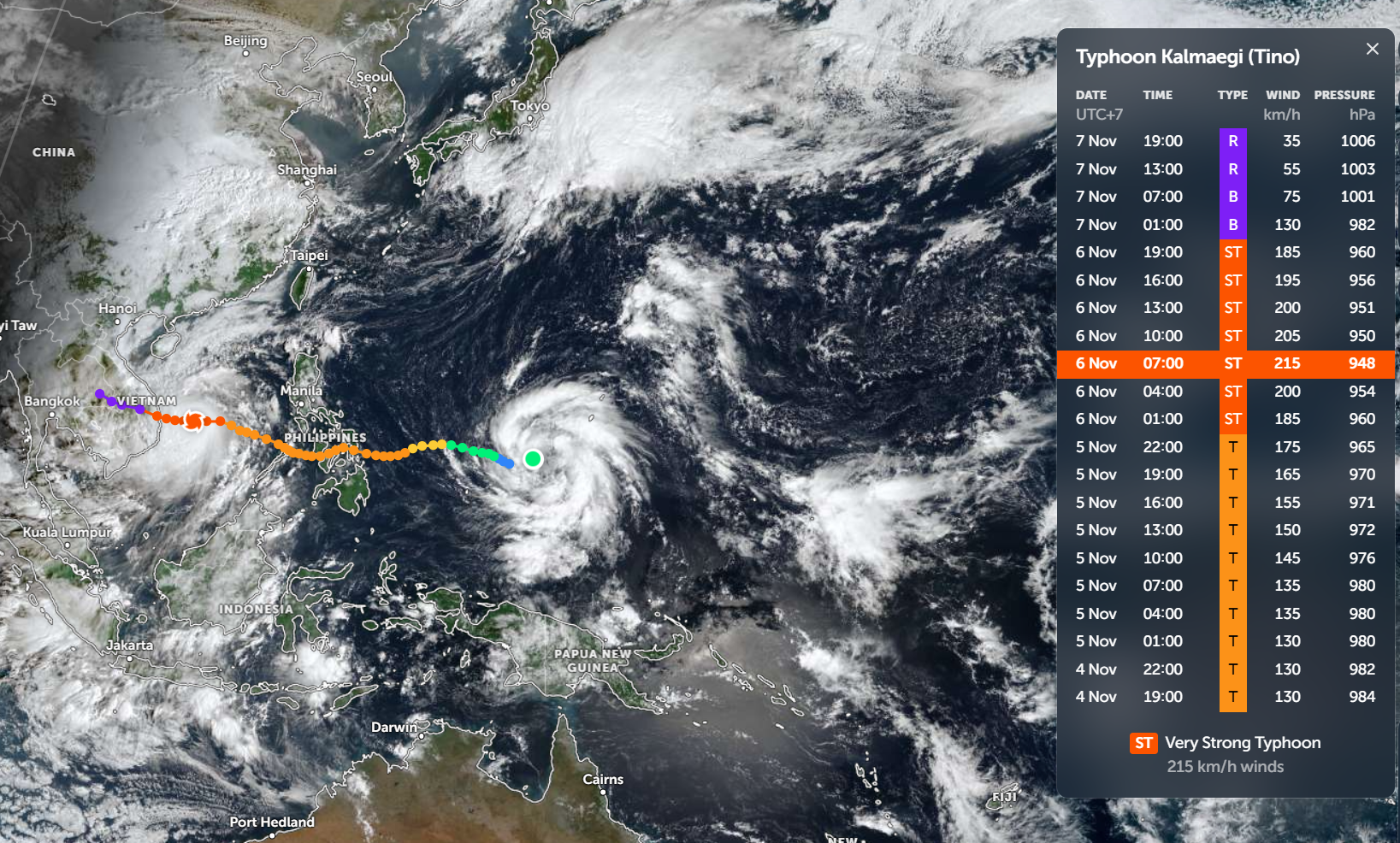
Over the past month, Viet Nam has faced a series of extreme weather events, including widespread flooding in the North and Central regions and severe landslides in the Central Highlands. The damage to lives, property, and production has been significant, deeply affecting livelihoods and economic activity. Most notably, in the past week, Typhoon Kalmaegi (Storm No. 13) brought prolonged heavy rainfall, strong winds, and heightened landslide risks across many provinces – especially in Central Viet Nam and the Central Highlands. The growing toll on people and infrastructure has posed major challenges for emergency response efforts. Thanks to decisive leadership from the Government and close coordination across all levels of authority, response and recovery efforts have been swiftly and comprehensively deployed. These actions have helped minimize losses and rapidly stabilize business and production activities. Map of Viet Nam’s seaport system after administrative adjustments Proactive Government – Confident Enterprises Upon early forecasts of Typhoon Kalmaegi’s complex developments, the National Steering Committee for Natural Disaster Prevention issued Directive No. 25/CĐ-BCĐ, urging provinces from North Central to the Central Highlands to activate emergency response plans to protect people and economic infrastructure. Emergency forces were fully mobilized to evacuate residents, safeguard assets, and inspect reservoirs, power grids, transportation, and telecommunications – especially in industrial zones and key logistics hubs. International transport systems, seaports, and airports remained operational, ensuring uninterrupted supply chains – critical for FDI enterprises. Recovery efforts were launched nationwide: electricity, transportation, and communications in key areas – particularly industrial parks and logistics centers – were quickly restored to ensure safe operations. Vantage Logistics – Vantage Logistics – Sharing Strength to Rise After the Storm In this context, Vantage Logistics not only maintained stable operations but also demonstrated strong social and humanitarian responsibility. The “Vantage Family” culture came to life through care, solidarity, and support – especially during these challenging times. From the earliest warnings, the entire Vantage team closely monitored the situation and extended special care to colleagues living and working in areas directly affected by Typhoon Kalmaegi: Many employees faced housing and transportation difficulties due to the storm. A rapid response team was formed to provide both material and emotional support. Timely encouragement and practical assistance empowered employees to stay resilient, maintain morale, and ensure operational continuity. “At Vantage Logistics, we believe every member is more than a colleague – they are a companion in building a shared home rooted in compassion, trust, and sustainable values.”Satellite image of Typhoon Kalmaegi over the Western Pacific Ocean, November 2025. Source: Zoom Earth National Resilience – A Foundation For Global Business This response effort reaffirms Viet Nam’s capacity for disaster risk management and its commitment to maintaining a safe, adaptable investment environment – even amid natural disasters. At the same time, Vantage Logistics has shown that a people-centered corporate culture is a powerful foundation for overcoming adversity and protecting what matters most: people. International partners can place their trust in Viet Nam’s rapid recovery capabilities, government support, and internal solidarity – key factors in ensuring business continuity under any circumstance.

14/11/2025

View More

Vantage News

7 Steps to Building B2C Export Capabilities: Vantage Logistics Addresses Three Critical Factors for Success in the US Market

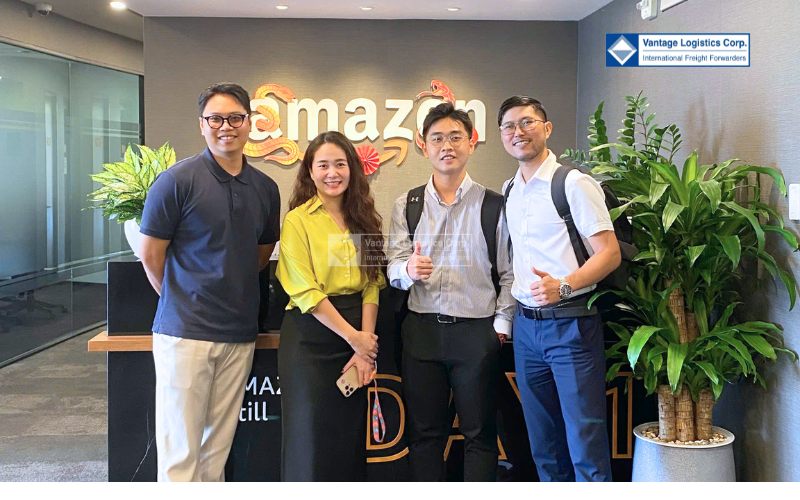
As traditional B2B export models face growing challenges, Vietnamese businesses are actively seeking new pathways to reach global consumers directly. On 24 October 2025, A workshop organised by Amazon Global Selling in Ho Chi Minh City brought together local brands and manufacturers in the South who are seeking new growth opportunities as traditional B2B export channels face increasing pressure. The programme introduced a structured 7-step framework for B2C export, providing businesses with a clear roadmap to enter the US and European markets. As a logistics partner supporting hundreds of Vietnamese exporters, Vantage Logistics shared practical insights on how logistics directly influences cross-border performance – from operational cost control and delivery speed to customer experience. The 7-Step Framework for Building B2C Export Capabilities Developed by Amazon Global Selling, the framework enables Vietnamese businesses to build sustainable and scalable B2C operations: Product development Financial planning Team capability building Supply chain flexibility Fulfilment and warehousing optimisation Marketplace account operations Brand building Logistics – The Strategic Engine Behind Steps 4, 5 and 6 In this framework, Vantage Logistics plays a central role where logistics directly determines competitiveness and market access. Vantage Logistics delivers a fully-integrated cross-border service portfolio, including warehousing, fulfilment, last-mile delivery, inventory control and end-to-end transportation from Vietnam to global consumers. Our solutions focus on: Flexible supply chain management – optimising flows from factories to international warehouses Fulfilment and storage solutions – connecting to global warehouse networks, particularly in the United States Cross-border logistics integrated with Amazon systems – enabling smooth marketplace operations “To succeed on Amazon, your supply chain must be adaptable with strong cost controls. Logistics is more than transportation – it is a core driver of competitiveness”, a Vantage representative stated. During the Q&A session, participants raised questions focusing on: Transportation costs and optimisation options Compliance, documentation and customs requirements Inventory planning and international warehouse operations Vantage Logistics addressed these concerns with actionable and scalable solutions, helping businesses confidently expand into the US market. From Vietnamese Factories to U.S. Consumers – No Longer Just a Dream Vantage Logistics is already working with Vietnamese brands to scale their direct-to-consumer exports. By managing warehousing, fulfilment, last-mile delivery, inventory and cross-border execution, we allow businesses to stay focused on product development and brand growth. With an established international partner network, connected warehouse facilities in the US and experienced logistics specialists, Vantage Logistics is closing the gap between Vietnamese manufacturers and global customers – enabling faster, more efficient market access. Ready to enter the US market? Speak to our experts for dedicated one-to-one guidance today! Contact: hannah.sgn@vlc.com.vn

24/10/2025

View More

Blog

RECYCLING OLD UNIFORMS – TAKING ACTION FOR THE ENVIRONMENT, BUILDING A CULTURE OF SUSTAINABLE DEVELOPMENT (17 SDGs)

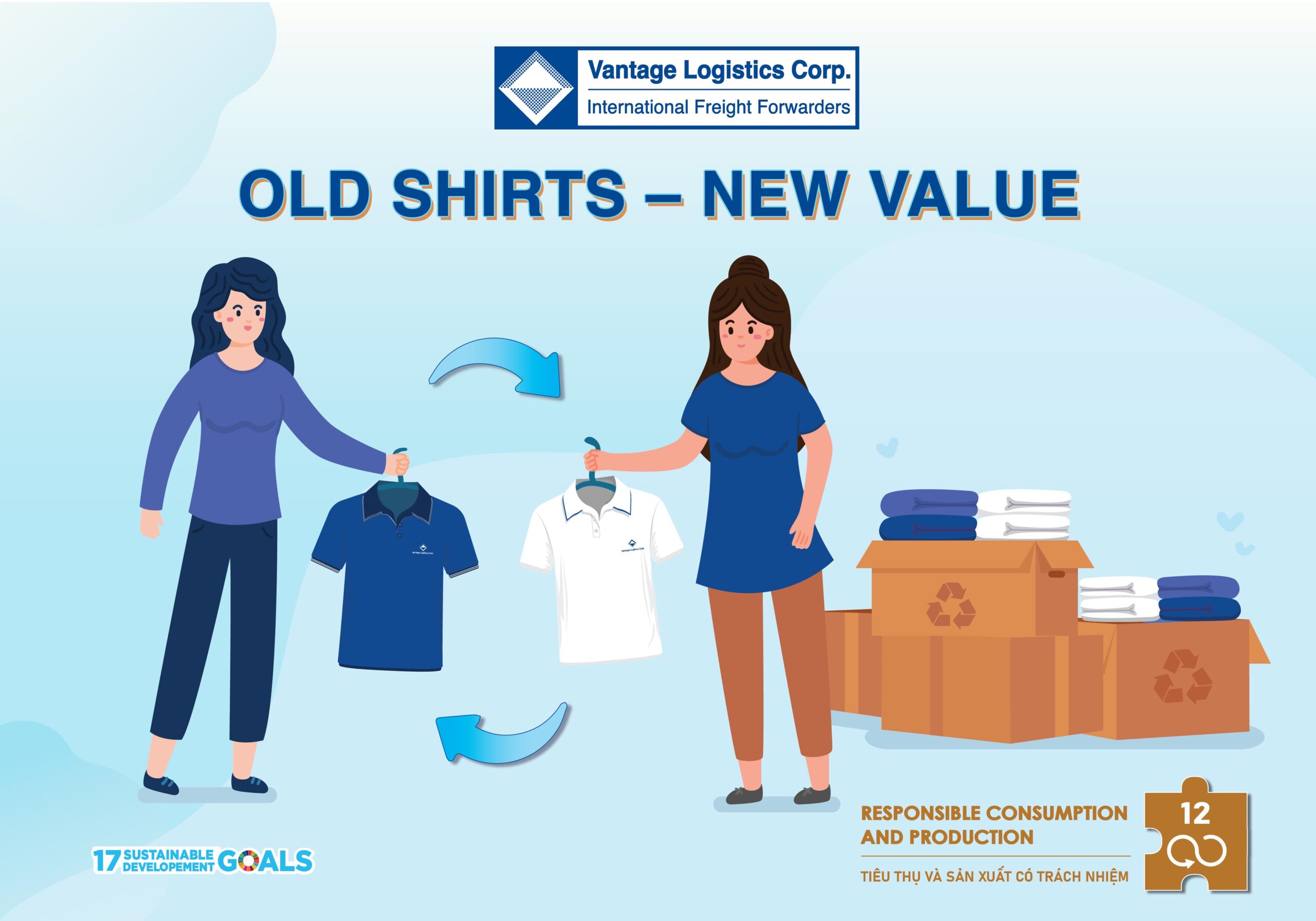
Collect Old Uniforms – Exchange for New Ones” kicks off a sustainable initiative to recycle and regenerate used uniforms, promoting the message: Reuse – Recycle – Co-create a sustainable environment. Continuing its commitment to sustainability and corporate social responsibility (CSR), Vantage Logistics has officially launched the initiative “Uniform Rebirth: Old Shirts – New Value”.This initiative integrates the company’s annual uniform distribution with a circular economy approach, reflecting the company’s ongoing effort to build a corporate culture rooted in environmental action. Every Uniform Has a Story. Every Action Creates a Greener Future At Vantage Logistics, a uniform is more than just professional attire – it represents unity, shared experiences and pride in every journey the team has taken together. This year, instead of letting used uniforms reach the end of their life cycle, we are giving them a new purpose – allowing them to continue contributing in a more sustainable way. Rebirth, Not Waste: Acting for SDG 12 Acknowledging the environmental impact of textile waste, Vantage Logistics is implementing this programme to advance the United Nations Sustainable Development Goal 12 (SDG 12): Responsible Consumption and Production. Used uniforms will be sent to a certified recycling partner in Ho Chi Minh City, where they will be processed into industrial materials such as padding and insulation – with a firm commitment to zero landfill waste. “Each uniform carries the pride of its wearer. By giving these uniforms a second life, we preserve and multiply that value – through our responsibility to the environment and the community. This is how we turn our sustainability commitment into tangible action within our corporate culture”, shared a Vantage Logistics representative. Vantage Logistics: From Strategy to Corporate Culture This initiative is more than an internal campaign – it stands as a clear statement of Vantage Logistics’ brand philosophy and sustainable direction: Supply Chain Responsibility: Demonstrating the capability to manage not only cargo but also waste, creating a closed-loop, sustainable ecosystem. Corporate Culture: Inspiring every team member – from BackOffice to Frontline – to take part in daily environmental action. Trusted Partnership: Strengthening Vantage’s position as a reliable logistics partner for global enterprises committed to ESG and sustainable growth. Vantage Logistics believes that consistent, meaningful actions – even the smallest ones – can drive long-term change. Through the Uniform Rebirth initiative, the company continues to build a greener, more responsible logistics industry, contributing positively to the sustainable future of Vietnam and beyond. Join Vantage Logistics in building a greener future – starting from the smallest actions today!

21/10/2025

View More

Blog

Advice from Expert: Marine Insurance – Not Only For Your Cargo

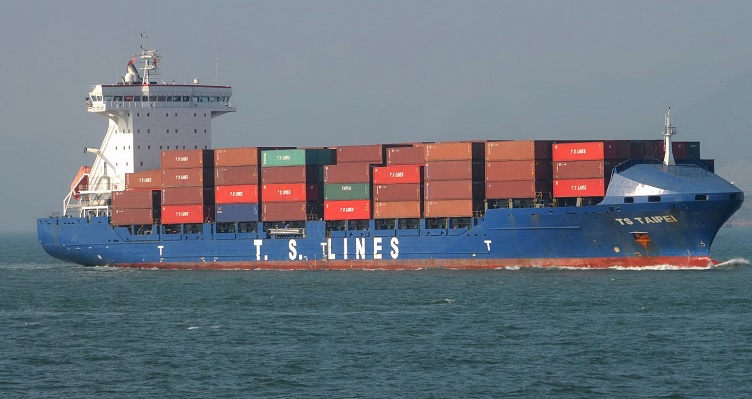
DID YOU KNOW? >> Last year 2017 about 170,000,000 containers were shipped around the world >> An average of 1,582 containers are lost at sea each year. In 2013 total 5,578 containers lost, including 4,293 containers lost in MOL Comfort’s sinking >> Every two or three days, there is a ship run aground somewhere If your cargo value is low, and just an average 1,582 containers lost in transit per year, is it worth to spend money to buy insurance? Your real lost could be much more than just the cost of your cargo. Not many shippers know that, in maritime law, when you ship your cargo on a vessel, you are actually binded into a kind of “joint venture” with the shipping line and other shippers who have cargo on that voyage. And if the vessel gets into trouble; is lost at sea, needs salvaging, or has to dump containers overboard to save the ship; then you and other shippers with cargo on board proportionally share these costs. Per maritime law, ship owners are able to pass the bulk of their risk on to the shippers who use their service by a precedent called the “general average principle”. Simply put the “general average principle” is where all parties in a sea venture proportionally share any losses resulting from a voluntary sacrifice of part of the ship or cargo to save the whole in an emergency. Even if the loss of your cargo might not be worth that much, your share of the cost for a voyage mishap could be huge. The term “loss” in the “general average principle” applies to any loss on the voyage.  So even if your container or cargo is safe and sound on the vessel, you may still being asked to contribute towards the loss of other shipper’s container. This is based on the principle that the other shipper’s cargo was sacrificed to save not only the vessel, but your cargo as well. Potential “general average” scenarios include: Where the vessel runs agrounded in bad weather causing delays; you may be liable for a proportion of the ship damage, salvage costs and damage to other shippers goods Where other shipper’s cargo is dumped overboard to save the voyage but yours is salvaged; if a “general average” is declared by the Ship’s Master, you would have to put up a cash bond or your Insurance puts up a guarantee before your goods would be released. By not taking out marine insurance you are taking the risk that the loss of your cargo worth thousands could end up costing you hundreds of thousands. >>> Advice from Florence Lam and insurance partner, contact at: florence-vn@vantage-logistics.com.vn...

19/05/2018

View More

Vantage News

Preparing For The SOLAS Container Weight Verification Requirement

With effective from July 1st, 2016, the International Maritime Organization (IMO) will enforce globally the Safety of Life at Sea (SOLAS) Convention requirements regarding the verification of the gross weight of packed containers. Vessel carriers will not load containers without having a VGM. As Shippers, you will be responsible for the verification of the packed container’s weight and run the risk of missing an intended sailing if the Verified Gross Mass (VGM) documentation compliance is ignored. We will provide every Shipper with a VGM document to fill out and return to us by a specified date. We will then submit to the vessel and terminal operators the exact VGM that is provided to us by the Shipper. Any variance or discrepancy in the VGM will be the responsibility of the Shipper and Vantage Logistics will not be held liable for any fines assessed due to this discrepancy. What are the Shipper’s responsibilities? The Shipper (that is the party listed on the Bill of Lading or sea waybill) is RESPONSIBLE for providing the VGM document to us BEFORE vessel loading date. The VGM document will include container number, tare weight of container (this is stenciled on every container!), and total weight of all cargo loaded – including any dunnage (securing) materials (such as skids, bracing, etc). The weight amounts are to be totaled as the Gross Container Weight. The VGM document must be signed by the Shipper The scale used for weighing your cargo has to be calibrated / certified in accordance with local/national rules (and must be verifiable by you if weight is brought into question by carrier). How is Verified Gross Mass (VGM) calculated? There are two permissible methods prescribed by IMO that Shippers may use to determine the container weight of a packed container; Method 1: Weighing the entire container after it has been packed using calibrated and certified weighing equipment. If a weighbridge is used, you must subtract the weight of the truck, chassis and fuel to get the weight of the packed container. Method 2: Weighing all the contents of the container (including pallets, packing material, etc.) and adding it to the container tare weight that is written on the door of the container. Cargo must be weighed using calibrated and certified weighing equipment. No estimates are allowed in either method. Will the port accept containers without the VGM? Origin ports in Viet Nam: there is no clear instruction from Viet Nam Ministry of Transportation yet. International ports: most of them will not accept. What about less than container load (LCL) shipments and containers that are not loaded by the Shipper? A VGM submission is required for all ocean shipments. The responsibility for providing the carrier the VGM for the container remains with the Shipper. However, if consolidator do the LCL consolidation, they will weigh the cargo and provide the VGM to the vessel operator. Reference:  WSC IMO Requirement for Container Weight Verification WSC Guidelines for Implementing SOLAS Container Weight Verification Requirement Contact us for more information: cindy-vn@vantage-logistics.com.vn...

10/06/2016

View More

Blog

Export Shipment Denied?

How to do when export shipment was denied? Many Viet Nam exporters face the situation of shipment being denied by buyer, common reasons their buyers may raise: Release shipment first, after buyer can sell, buyer will pay later (risky for exporter and agaist what agreed before). Buyers raise some quality problems and request a big discount. Some buyers even do not response at all. Most of exporters when facing such situation will go the below steps: 1/ Requesting carrier to hold cargo. 2/ Trying to convince buyer to arrange payment and pick up shipment. Unluckily, very rare case that shipper succeed. 3/ After too many unsuccessful efforts, exporter either have to agree for a big discount or trying to find another buyer in that country for a desperate sales. Above process take minimum about one month for final decision, and one or two weeks for necessary formalities to carry out that final decision. Per our experience, the average time is sixty (60) days. While the exporter trying to fix the problem, the carrier keep pushing because the storage or container demurrage keep increasing day by day. Take an example, shipment of 1 twenty-feet (1×20’) container to Los Angeles with carrier Cxx, container demurrage in Los Angeles is as follow: Free time: 5 days From 6th day onwards, demurrage USD220 per day. It takes exporter 50 days to solve, the container demurrage fee already reach at: USD220 x (50 – 5) = USD9,900. Most of the cases, under the pressure of increasing cost, exporter must come to agree to sell at big discount (for example, 40 – 50% off the price USD50,000), or desperately sell to other buyer with similar discount level, and exporter surely have to pay the demurrage cost before shipment released by carrier. Exporter suffer double loss here, the cargo price and the costs incurred, loss in this case is USD34,900, not to calculate other costs, for example, brokerage cost. Worse case, if cargo value is not very high and the costs incurred reach at a big percentage of cargo value, buyer may negotiate they take cargo against payment for container demurrage but no payment for cargo. In such cases, if exporter determine to ship cargo back to Viet Nam immediately when they realize initial signs of shipment denied, for example, within 10 days after shipment discharged at Los Angeles port, costs will be: Container demurrage: USD220 x (10 – 5) = USD1,100 Formalities to re-export out of Los Angeles: about USD500 Freight and surcharges: about USD1,000 Total loss about USD2,600 and exporter can bring cargo back to their country, under their control and no more under the cost pressure, they can take time to wait for another good buyer....

04/06/2016

View More

Vantage News

Circular 23/2015/TT-BKHCN

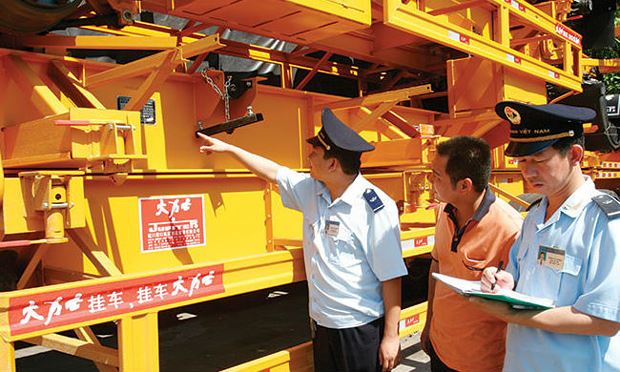
Circular 23/2015/TT-BKHCN will come into effect from 1st of July, 2016, about import of used machinery, equipment and technology lines. Main content is in Chapter II, Article 5 & 6: REQUIREMENTS FOR IMPORTING USED EQUIPMENT Article 5. General requirements Imported used equipment must satisfy safety, energy saving, and environmental protection requirements prescribed by applicable law. Article 6. Specific requirements 1. A piece of used equipment may be imported if it satisfies the following criteria: a) Its age does not exceed 10 years; b) It is manufactured in accordance with a National Technical Regulation (QCVN) or Vietnam’s Standard (TCVN) or Standards of G7 countries with regard to safety, energy saving, and environmental protection. 2. With regard to used equipment of investment projects, including new projects and extended projects, in the following cases: a) The project is subject to issuance of a decision on investment policies; b) The project is subject to issuance of investment registration certificate, regardless of a decision on investment policies. If the documents of a investment project has a list of used equipment and a competent authority issues a decision on investment policies, and an investment registration authority issues a investment registration certificate in accordance with the Law on Investment, Clause 1 of this Article shall not apply. Where necessary, the authority competent to decide investment policies and the investment registration authority may consult with an agency that is conversant with the technology of the used equipment before deciding the investment policies or issuing the investment registration certificate. 3. Used parts and components may only be imported when the manufacturing enterprise needs to replace or repair its operating equipment. The manufacturing enterprise may import itself or authorize another enterprise to do so. 4. Where necessary, depending on their fields, Ministers and Heads of ministerial agencies may lower the age limit of used equipment (below 10 years) and notify the Ministry of Science and Technology....

01/06/2016

View More

Vantage News

Fraud Warning

Few years back, there is a type of fraud committed by e-mail, mainly the fraudsters will make a fake e-mail address which is similar to their victims’ creditor e-mail, using that fake e-mail to inform their victims that the creditor has changed bank account and request the victims to settle payment to “new account” (which are the fraudsters’ account). Typical wordings from the fraudsters to justify a change of bank account details are as follow: Reference to our previous email of today our bank confirmed that our Account has been subjected to some tight security by the Income Tax Dept. and at this moment, we are unable to operate our previous account, due to which, we cannot use the funds that you will transfer for until the scrutiny is released. Therefore, this might require a change of account for receiving our remittance for first hire payment. On your confirmation that payment has not yet been sent we will forward our company’s subsidiary bank details with the same beneficiary name and a revised invoice. When you receive such e-mail, our advice is you should remain vigilant and treat any instructions to change bank account as suspicious. Another recent version of this type of fraud reverses the position. Rather than try to divert the payment being made by the owner the fraudsters attempted to get the agent to send them the money. The owners had sent a message (authentic) to their port agent advising of “cash to master” payments they were going to make to the agent’s account for subsequent delivery to the ship. The money duly arrived but almost immediately the agent received a message (fraud) saying that the payments were not required and could the agent return the funds. The message included the fraudster’s account details for the repayment. You should verify suspicious instructions by telephoning the other party. You should not reply directlyto emails but instead re-enter the email address from a previous message that was accepted as being authentic. Similarly, you should not call a telephone number in the fraudulent email....

22/04/2016

View More
1 14 15 16 17 18