BLOG

Blog

RECYCLING OLD UNIFORMS – TAKING ACTION FOR THE ENVIRONMENT, BUILDING A CULTURE OF SUSTAINABLE DEVELOPMENT (17 SDGs)

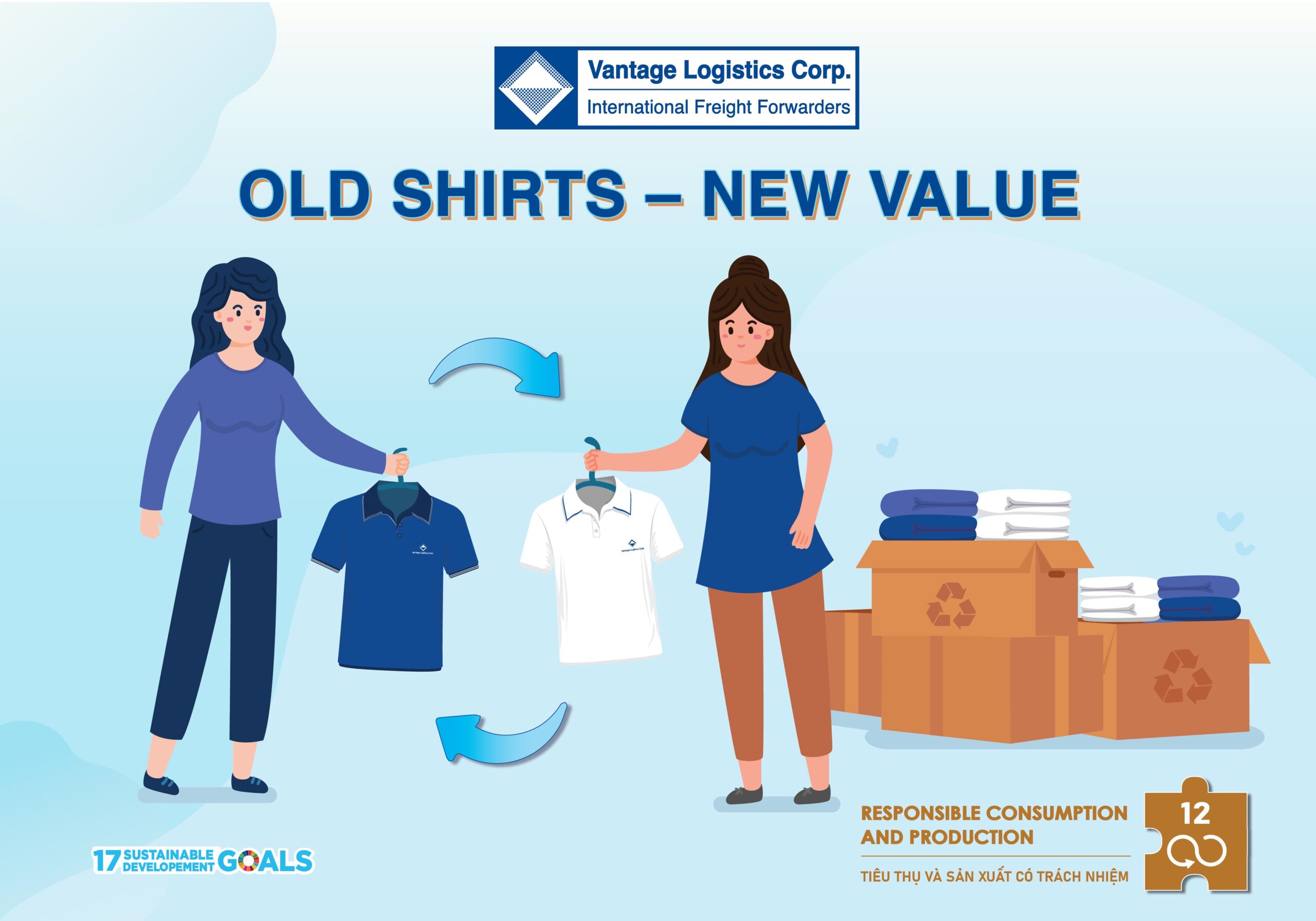
Collect Old Uniforms – Exchange for New Ones” kicks off a sustainable initiative to recycle and regenerate used uniforms, promoting the message: Reuse – Recycle – Co-create a sustainable environment. Continuing its commitment to sustainability and corporate social responsibility (CSR), Vantage Logistics has officially launched the initiative “Uniform Rebirth: Old Shirts – New Value”.This initiative integrates the company’s annual uniform distribution with a circular economy approach, reflecting the company’s ongoing effort to build a corporate culture rooted in environmental action. Every Uniform Has a Story. Every Action Creates a Greener Future At Vantage Logistics, a uniform is more than just professional attire – it represents unity, shared experiences and pride in every journey the team has taken together. This year, instead of letting used uniforms reach the end of their life cycle, we are giving them a new purpose – allowing them to continue contributing in a more sustainable way. Rebirth, Not Waste: Acting for SDG 12 Acknowledging the environmental impact of textile waste, Vantage Logistics is implementing this programme to advance the United Nations Sustainable Development Goal 12 (SDG 12): Responsible Consumption and Production. Used uniforms will be sent to a certified recycling partner in Ho Chi Minh City, where they will be processed into industrial materials such as padding and insulation – with a firm commitment to zero landfill waste. “Each uniform carries the pride of its wearer. By giving these uniforms a second life, we preserve and multiply that value – through our responsibility to the environment and the community. This is how we turn our sustainability commitment into tangible action within our corporate culture”, shared a Vantage Logistics representative. Vantage Logistics: From Strategy to Corporate Culture This initiative is more than an internal campaign – it stands as a clear statement of Vantage Logistics’ brand philosophy and sustainable direction: Supply Chain Responsibility: Demonstrating the capability to manage not only cargo but also waste, creating a closed-loop, sustainable ecosystem. Corporate Culture: Inspiring every team member – from BackOffice to Frontline – to take part in daily environmental action. Trusted Partnership: Strengthening Vantage’s position as a reliable logistics partner for global enterprises committed to ESG and sustainable growth. Vantage Logistics believes that consistent, meaningful actions – even the smallest ones – can drive long-term change. Through the Uniform Rebirth initiative, the company continues to build a greener, more responsible logistics industry, contributing positively to the sustainable future of Vietnam and beyond. Join Vantage Logistics in building a greener future – starting from the smallest actions today!

21/10/2025

View More

Blog

VANTAGE LOGISTICS CONTINUES TO ADVANCE THE 17 UNITED NATIONS SUSTAINABLE DEVELOPMENT GOALS (17 SDGs)

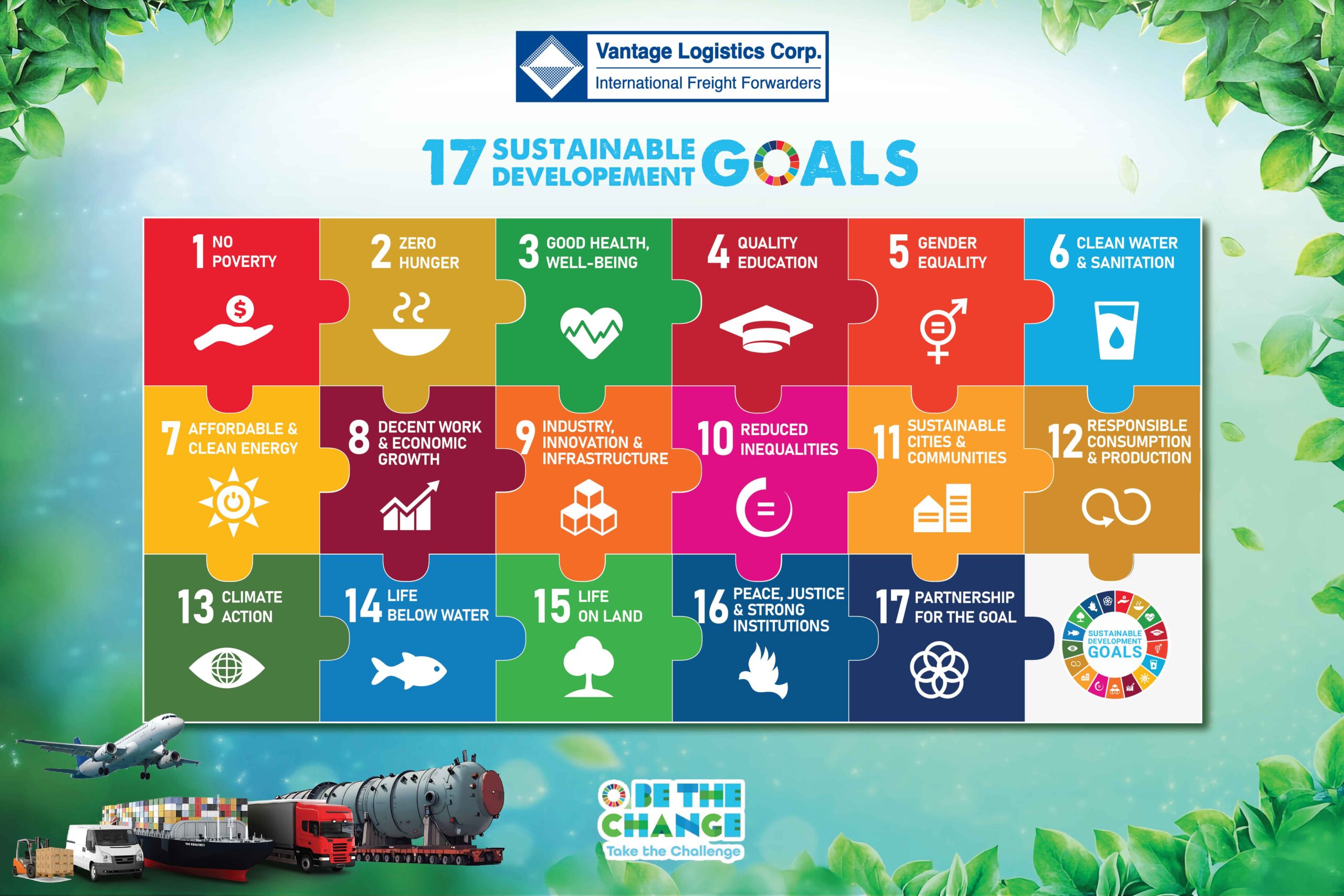
In an era defined by environmental, social and economic challenges, Vantage Logistics reaffirms its long-term commitment to building a modern, efficient and future-friendly logistics ecosystem. The year 2025 marks a critical juncture — the global community is entering the decisive phase to achieve the 17 Sustainable Development Goals (SDGs) set by the United Nations. With only five years remaining before the 2030 deadline, the world faces unprecedented development challenges, including climate change, inequality, financial instability and resource scarcity. According to the 2025 SDG Progress Report, only 35% of targets show clear advancement, while 18% are regressing. This underscores the urgent need for stronger, more coordinated action from both governments and businesses worldwide. THE 17 SUSTAINABLE DEVELOPMENT GOALS (17 SDGs)  Since 2015, Vantage Logistics has aligned its business strategy with the 17 SDGs, embedding sustainability, social responsibility and long-term community value into its operations. As a key player in the logistics sector – a critical link in the global supply chain – Vantage actively drives initiatives such as carbon emission reduction, digital transformation, workforce development and community engagement, contributing to the realisation of the following goals: 1. GOAL 1 – NO POVERTY – END POVERTY IN ALL ITS FORMS EVERYWHERE End poverty in all its forms everywhere Viet Nam has made remarkable progress in poverty reduction over the past 30 years. To further this effort, the government launched the National Target Program on Sustainable and Inclusive Poverty Reduction (2021–2025) under Decision No. 90/QĐ-TTg (2022). This achievement reflects improved living conditions for millions and lays the foundation for narrowing income gaps and promoting inclusive growth. 2. GOAL 2 – ZERO HUNGER Achieve food security and promote sustainable agricultureOnce a food-insecure country, Viet Nam has become one of the world’s leading rice exporters. The Prime Minister issued Decision No. 804/QĐ-TTg to establish the National Steering Committee for the “Zero Hunger” Action Program (2014–2025).Since then, economic and social infrastructure in poor regions, especially in rural, mountainous, and ethnic minority areas, has received strong investment. Income and living conditions have gradually improved, moving closer to the minimum living standard. 3. GOAL 3 – GOOD HEALTH & WELL-BEING Ensure healthy lives and promote well-being for allThis goal aims to ensure healthy lives and promote well-being for all at all ages. Viet Nam is working to end preventable child deaths, control AIDS, tuberculosis, malaria, waterborne and non-communicable diseases, and reduce traffic accidents and substance abuse. Resolution No. 20-NQ/TW (2017) affirms the commitment to improving life expectancy, health, physical stature, and quality of life.All citizens are entitled to equal protection, care, and access to health insurance. 4. GOAL 4 – QUALITY EDUCATION Ensure inclusive and equitable quality education for allViet Nam ranks among the top 40 countries with general education comparable to OECD standards, top 70 in higher education, and around 90th in vocational training. According to the World Bank (2020), Vietnam’s Human Capital Index for education ranks 15th globally, on par with New Zealand, the Netherlands, and Sweden.Key education indicators: 99% of 6-year-olds enrolled in Grade 1 92.08% completion rate for primary education – among the top in ASEAN In SEA-PLM 2019, Vietnamese primary students ranked top in ASEAN in Reading, Writing, and Mathematics Quality education plays a crucial role in fostering human development, reducing regional disparities, and enhancing adaptability in a modern, dynamic society. 5. GOAL 5 – GENDER EQUALITY Achieve gender equality and empower women and girls The proportion of women in the Quốc hội Việt Nam reached 30.26% in 2021, higher than the global average. In 2022, 69% of women participated in the labour force – one of the highest rates in Asia. Việt Nam has maintained a low gender gap in education and healthcare. The Government has enacted the Law on Gender Equality and the revised Law on Domestic Violence Prevention and Control, while implementing programmes that support women’s entrepreneurship, leadership, and access to finance. Gender equality is a driver of social development, enabling the effective utilisation of a diverse and innovative workforce. 6. GOAL 6 – CLEAN WATER & SANITATION Ensure access to clean water and sanitation Viet Nam is actively advancing Goal 6 with strong support from the government and international partners. Numerous programs have been launched to ensure access to clean water and safe sanitation, especially in rural and disadvantaged areas. The government issued Resolution No. 136/NQ-CP to promote sustainable development through improved water infrastructure, sanitation systems, and public awareness. Clean water and sanitation are not only basic human needs but also play a critical role in protecting public health, reducing disease, and improving quality of life – contributing to both community well-being and environmental protection. 7. GOAL 7 – AFFORDABLE & CLEAN ENERGY Ensure access to sustainable and modern energy By 2022, 99.7% of Vietnam’s population had access to electricity, including over 99% in rural areas. Renewable energy accounted for approximately 30% of total power capacity, including solar, wind, and small-scale hydropower. To advance energy transition and promote sustainable development, the Prime Minister of Viet Nam issued Decision No. 622/QĐ-TTg on the National Action Plan and Decision No. 681/QĐ-TTg on the Implementation Strategy. Expanding clean energy helps reduce emissions, enhance energy independence, and drive green economic growth. 8. GOAL 8 – DECENT WORK & ECONOMIC GROWTH Promote sustained, inclusive and productive economic growthTo advance SDG 8, Viet Nam has shown strong commitment to tackling unemployment and promoting decent work. The government issued Resolution No. 136/NĐ-CP (2020), ratified 7 out of 8 ILO conventions, and implemented major labor law reforms. These efforts aim to expand employment opportunities, support the development of a modern market economy, and leverage national strengths to catch up with regional and global progress. 9. GOAL 9 – INDUSTRY, INNOVATION & INFRASTRUCTURE Build resilient infrastructure and foster innovationIn 2023, Viet Nam had over 1,400 km of expressways, with a target of reaching 5,000 km by 2030. Seaports, airports, and logistics hubs have been expanded to enhance both domestic and international connectivity. The Government is accelerating digital transformation, developing high-tech industries, and investing in R&D, which accounts for 0.5% of GDP. Public–private partnership (PPP) models are playing a key role in mobilising social capital, fostering green and sustainable growth. 10. GOAL 10 – REDUCED INEQUALITIES Reduce inequality within and among countriesViet Nam’s GINI coefficient – a key indicator of income inequality – remained at 0.373 in 2022. The poverty rate among ethnic minority households fell to 18.3% in the same year, reflecting steady progress in narrowing income disparities. The Government has implemented broad policies to support disadvantaged regions, expand social welfare, and improve access to education for vulnerable groups. These efforts contribute to building a fairer and more inclusive society. 11. GOAL 11 – SUSTAINABLE CITIES & COMMUNITIES Make cities inclusive, safe and sustainableVietnam’s urban population reached 41.7% in 2023 – rapid urbanisation is creating strong development momentum but also intensifying pressure on infrastructure, the environment, and climate resilience.The Government is implementing the National Urban Development Strategy, focusing on the development of smart cities, green spaces, and modern public transport systems. Major cities such as Ha Noi, Da Nang and Ho Chi Minh City are adopting integrated planning approaches to build more sustainable, liveable, and climate-adaptive communities. 12. GOAL 12 – RESPONSIBLE CONSUMPTION & PRODUCTION Ensure sustainable consumption and production patternsIn Viet Nam, approximately 70% of greenhouse gas emissions come from the energy, manufacturing, and consumption sectors. To address this challenge, the Government has introduced the Green Growth Strategy and the Circular Economy Action Plan 2021–2030, encouraging businesses to upgrade technology, recycle and reuse resources, and reduce waste.Notably, Extended Producer Responsibility (EPR) regulations have come into effect, requiring companies to actively participate in the collection and treatment of post-consumer products.These measures support the transition towards a resource-efficient, environmentally responsible, and sustainable economy. 13. GOAL 13 – CLIMATE ACTION Take urgent action to combat climate changeViet Nam is among the 10 countries most severely affected by climate change. In 2023, economic losses from natural disasters were estimated at VND 10 trillion, with millions of people impacted by floods, droughts, and saltwater intrusion. The Government has pledged to achieve net-zero emissions by 2050, while implementing the National Climate Change Strategy and the National Adaptation Plan to 2030. Key initiatives include investments in renewable energy, disaster risk management, and enhanced early warning systems. 14. GOAL14 – LIFE BELOW WATER Conserve and sustainably use ocean resourcesViet Nam has a coastline of over 3,200 km, playing a strategic role in economic development. However, 60% of nearshore coral reefs are degraded, and an estimated 0.28–0.73 million tonnes of plastic waste enter the ocean each year. To address this, the Government has enacted the amended Environmental Protection Law and the National Action Plan on Ocean Plastic Waste to 2030, aiming to reduce 75% of marine plastic waste.In parallel, marine biodiversity conservation, expansion of coastal protected areas, and promotion of a sustainable blue economy are being implemented to safeguard marine resources for future generations. 15. GOAL 15 – LIFE ON LAND Protect, restore and promote sustainable ecosystemsViet Nam ranks among the 16 most biodiverse countries in the world. However, according to the 2023 report by the Ministry of Agriculture and Rural Development, natural forests continue to face mounting pressure from economic development and climate change. While the forest coverage rate reached 42.02% in 2023, the quality of many critical ecosystems has declined.To address this, the Government has rolled out the National Biodiversity Strategy to 2030, with a Vision to 2050, focusing on conserving special-use forests, restoring degraded ecosystems, and strengthening forest protection measures.Community-based forest management, reforestation initiatives, and mangrove restoration programmes are helping to maintain ecological balance and safeguard terrestrial natural resources. 16. GOAL 16 – PEACE, JUSTICE & STRONG INSTITUTIONS Promote peaceful and inclusive societiesAccording to the World Justice Project Rule of Law Index 2023, Viet Nam ranked 86th out of 142 countries, reflecting steady progress in administrative reform, transparency, and the efficiency of public institutions. The Government has advanced digital transformation in public administration, expanded online public services, and enhanced citizen feedback and oversight mechanisms.Key national programmes on anti-corruption, judicial reform, and law enforcement capacity building are being implemented to foster a fair, stable, and trustworthy governance environment. 17. GOAL 17 – PARTNERSHIPS FOR THE GOALS Strengthen global partnerships for sustainable developmentGoal 17 highlights the importance of building strong partnerships and global collaboration. Every individual and organization plays an active role in achieving the Sustainable Development Goals, helping to create a unified international community. This requires effective coordination and connectivity across: Finance, Technology, Capacity building, Trade Viet Nam actively engages in global initiatives such as JETP, green finance, and fair trade, while promoting public–private partnerships (PPP) to mobilize international resources and knowledge.Multidimensional cooperation is key to addressing global challenges and shaping a sustainable future. Global commitments only create real impact when translated into practical, measurable actions. For Vantage Logistics, sustainability is not a slogan – it is embedded in daily operations. Vantage Logistics – Action and Commitment Vantage Logistics chooses sustainable development not only for business benefits, but for the shared prosperity of society. We believe that every action we take today – from optimising transport routes and investing in greener infrastructure to empowering people and strengthening partnerships, every decision is a deliberate step towards a more sustainable future. “Sustainable growth is not an option — it is our responsibility.”

08/10/2025

View More

Blog

Vantage Logistics & Amazon Global: Strengthening Presence In The Global E-Commerce Ecosystem

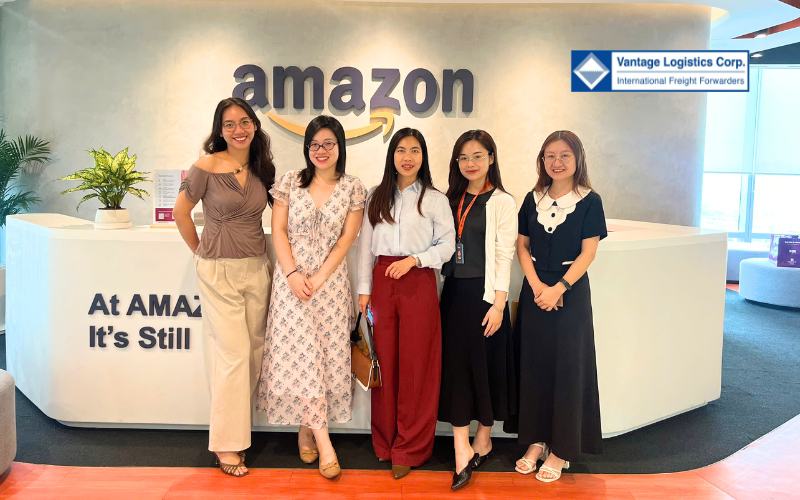
The presence of Vantage Logistics at Amazon’s Hanoi office on 2 October 2025 not only marked a step forward in fostering closer collaboration between the two sides, but also underscored Vantage Logistics’ commitment to supporting and empowering Vietnamese sellers to participate in the global e-commerce ecosystem. Partnering with Amazon, Reinforcing Role in the Global Supply Chain For years, Vantage Logistics has been delivering end-to-end logistics solutions to both Vietnamese and international sellers – from transportation to customs clearance. This event is not a new partnership but an opportunity to reflect on a long-standing collaboration, while raising awareness of the company’s capabilities and commitment to cross-border e-commerce. “The presence of our team at Amazon symbolises our long-term engagement and increasingly critical role in helping Vietnamese sellers expand globally.” – Ms. Hannah, Global Sales Director. Vantage Logistics – Amazon-Standard Logistics Partner With more than 23 years of experience in international forwarding, Vantage Logistics has established a robust network supporting Vietnam’s exporters in reaching global markets. Beyond transportation, the company provides logistics solutions that fully comply with Amazon’s operational standards, empowering sellers to scale on the world’s largest e-commerce platform. Key achievements: Ranked No.1 in Vietnam for export volume to the U.S. (2022) among freight forwarders Listed in the Top 20 international freight forwarders by export volume to the U.S. Hands-on experience with tens of thousands of oversized e-commerce shipments annually Comprehensive solutions for amazon sellers: Door-to-door cross-border shipping via sea, air, and road U.S. transshipment warehouses (LAX, NYC) with direct FBA/FBM connections Amazon-compliant export procedures: HS code consulting, C/O, REX, and packaging standards Cost-optimised shipping with reduced risks of Amazon standard violations Digitalisation & green logistics: VFreight platform, real-time tracking, FTA compliance, and environmental standards Team Presence – A Symbol of Strategic ConnectionThe presence of Vantage Logistics’ representatives at Amazon serves as a symbol of trust, strategic alignment, and long-term commitment between the two parties – working together towards sustainable growth and creating competitive advantages for the Vietnamese seller community on their journey to global expansion. Vantage Logistics: Advancing the Journey of Empowering Vietnamese Sellers Looking ahead, Vantage Logistics will continue to strengthen its support for Vietnamese sellers through: Participation in Amazon Seller Conference 2025 1-on-1 logistics strategy consulting, including tailored programmes for new sellers Enhanced operational connections between Vietnam and the U.S. Vantage Logistics remains committed to expanding operational capacity, deepening cross-border connections, and accompanying Vietnamese sellers on their journey to conquer international markets. Contact Vantage Logistics today for customised logistics solutions to boost your exports via Amazon! → Explore cross-border logistics solutions for sellers at: https://globalsales.vn/ For more information and support, please contact: Email: hannah.sgn@vlc.com.vn Hotline: 0948 121 28

03/10/2025

View More

Blog

onditions to apply C/O for transit cargo, temporary import- re export in Vietnam

Certificate of origin is an essential document in import and export. According to Vietnam law and legal, Certificate of Origin (C/O) is only issued for Vietnamese’s businessman, so we can not have C/O for transit cargo. For temporary import – re export: we can apply C/O by some below cases: – Case 1: commodity is processed/ manufactured in Vietnam with localization rate higher than 30% FOB value: Commodity is processed/ manufactured in Vietnam with localization rate higher than 30% of FOB value, the VCCI  will issue C/O form B for Vietnamese’s businessman. Commodity is processed/ manufactured in Vietnam with localization rate higher than 40% FOB value, the MOIT (Ministry of Industry and Trade) will be able to issue all kinds of C/O form (depends on demand of Vietnamese Businessman). – Case 2: commodity is not processed/ manufactured in Vietnam or localization rate lower than 30% FOB value: In this case, the VCCI will issue the Certificate form X (this Certificate is not a Cerftificate of Origin). Exporter declares the condition of commodity in cell no.9 (Declaration by  Exporter) on the Certificate form X under the guideline of Circular 05/2018TT-BTC, effective from April 3rd, 2018. If you have any concern about C/O in Vietnam or need more related advice, don’t hesitate to contact our Customs Expert: Ms.Theresa/ Email: theresa-vn@vantage-logistics.com.vn...

28/11/2018

View More

Blog

The Case of “Con Cung” and The Importance Of Choosing A Right Customs Clearance Service Provider

23/08/2018 From the case of  “Con Cung” Mom and Baby Shopping System Con Cung JSC is one of the largest supermarket chains for mom and baby in Viet Nam. Founded in 2011, Con Cung has specialized in distributing mom and children’s products such as clothing, food, milk, diapers… The company operates 346 retail stores in Vietnam, including 313 Con Cung shops and 33 Toy City stores and focuses on the Ho Chi Minh city and the South market. In 2017, the sales of Con Cung reached over $43 million. In the past days, many of paper and internet newspaper, together with some internet socials, have continously put on public that Con Cung has cheated on the origin of goods, which is a serious violation of the law and regulations on production and business activities. However, The Ministry of Industry and Trade (MoIT), through their Dedicated Inspection team have just officially announced their inspection result. The result clarified that Con Cung did not commit any violation in law of protecting the interest of consumers, product quality and origin, and Con Cung has all the legal and valid import dossiers in compliance with  import regulations and the origin of goods. The incident started from a complaint from a customer in HCM City, who claimed that he bought a fabric product from Con Cung with the label “Made in Thailand” “looked like a replaced one”. Journalists and Market Surveillance Agency of HCM City immediately paid big attention to this case. While the investigation was still under conduction, the situation had became more and more noisy and complicated,  with various  rumours and many contradict opinions poured into the incident, making Con Cung to face a business crisis with lot of negative impact not only on income but also on reputation. Being one of the reputable professional logistics and customs clearance service provider in Vietnam, Vantage Logistics was contracted by Con Cung for customs clearance service. One of the reasons we won Con Cung’s trust is that we always comply with laws and regulations, and proactively consult our clients how to improve their documents and business actitivities to the highest level of compliance. And in this crisis, Vantage Logistics proved that Con Cung had made the right choice. During the whole investigation process, our team have always been closely working with Con Cung’s team, providing all the proofs and documents, all necessary advice related to customs law and regulations. With all the legal compliance that Con Cung and Vantage did for all the import shipments, the investigation conclusion could not be anything else except that Con Cung did not commit any violation in law of protecting the interest of consumers, product quality and origin. To the lesson learned from the importance of choosing right customs clearance service provider. As we know, Customs procedures for each export/import item are different, and various from country to country. It is really complicated and needs comprehensive knowledge to do it properly. Customs procedures often include regulations, circulars, and documents which are intergral with different ministries and authorities, can result in confusion and difficulties for businesses; moreover, the process of Customs clearance of goods must go through many steps from the preparing and checking documents, filing on-line declaration, submission of dossiers at Customs border gates, procedures of goods inspection, procedures of proving product origin, labeling, value of goods…  To ensure all steps in compliance is not easy at all. It requires deep and updated knowledge of Customs regulations and procedures. Accuracy in preparing customs documents is also significant. Mistakes can lead not only to delay in the whole customs clearance process, but also to penalty and bad marks in import/export history records with customs. And of course, timeliness. Moreover, the completion of customs procedures in compliance with laws and regulations is not only important at the time the goods are exported/imported but also is a decisive factor in proving that a business is genuine and honest with its customers and Con Cung is a concrete case study. Therefore, choosing a professional and expererienced Customs clearance service provider plays a very important role for businesses in international trading; and businesses need to consider carefully while choosing their long-termed service provider. I think key points to choose Customs clearance service provider are: Professionally proficient Compliance Clear and effective standard working procedure High performance Supportive and providing added values to customers Vantage Logistics with more than 15 years of working in providing logistics and Customs clearance services, has been doing with our best effort to provide the most effective solutions for our customer as our motto – compliance, quick and effectiveness. And the case of Con Cung has again proven it.  ...

23/08/2018

View More

Blog

Advice from Expert: Marine Insurance – Not Only For Your Cargo

DID YOU KNOW? >> Last year 2017 about 170,000,000 containers were shipped around the world >> An average of 1,582 containers are lost at sea each year. In 2013 total 5,578 containers lost, including 4,293 containers lost in MOL Comfort’s sinking >> Every two or three days, there is a ship run aground somewhere If your cargo value is low, and just an average 1,582 containers lost in transit per year, is it worth to spend money to buy insurance? Your real lost could be much more than just the cost of your cargo. Not many shippers know that, in maritime law, when you ship your cargo on a vessel, you are actually binded into a kind of “joint venture” with the shipping line and other shippers who have cargo on that voyage. And if the vessel gets into trouble; is lost at sea, needs salvaging, or has to dump containers overboard to save the ship; then you and other shippers with cargo on board proportionally share these costs. Per maritime law, ship owners are able to pass the bulk of their risk on to the shippers who use their service by a precedent called the “general average principle”. Simply put the “general average principle” is where all parties in a sea venture proportionally share any losses resulting from a voluntary sacrifice of part of the ship or cargo to save the whole in an emergency. Even if the loss of your cargo might not be worth that much, your share of the cost for a voyage mishap could be huge. The term “loss” in the “general average principle” applies to any loss on the voyage.  So even if your container or cargo is safe and sound on the vessel, you may still being asked to contribute towards the loss of other shipper’s container. This is based on the principle that the other shipper’s cargo was sacrificed to save not only the vessel, but your cargo as well. Potential “general average” scenarios include: Where the vessel runs agrounded in bad weather causing delays; you may be liable for a proportion of the ship damage, salvage costs and damage to other shippers goods Where other shipper’s cargo is dumped overboard to save the voyage but yours is salvaged; if a “general average” is declared by the Ship’s Master, you would have to put up a cash bond or your Insurance puts up a guarantee before your goods would be released. By not taking out marine insurance you are taking the risk that the loss of your cargo worth thousands could end up costing you hundreds of thousands. >>> Advice from Florence Lam and insurance partner, contact at: florence-vn@vantage-logistics.com.vn...

19/05/2018

View More

Blog

Export Shipment Denied?

How to do when export shipment was denied? Many Viet Nam exporters face the situation of shipment being denied by buyer, common reasons their buyers may raise: Release shipment first, after buyer can sell, buyer will pay later (risky for exporter and agaist what agreed before). Buyers raise some quality problems and request a big discount. Some buyers even do not response at all. Most of exporters when facing such situation will go the below steps: 1/ Requesting carrier to hold cargo. 2/ Trying to convince buyer to arrange payment and pick up shipment. Unluckily, very rare case that shipper succeed. 3/ After too many unsuccessful efforts, exporter either have to agree for a big discount or trying to find another buyer in that country for a desperate sales. Above process take minimum about one month for final decision, and one or two weeks for necessary formalities to carry out that final decision. Per our experience, the average time is sixty (60) days. While the exporter trying to fix the problem, the carrier keep pushing because the storage or container demurrage keep increasing day by day. Take an example, shipment of 1 twenty-feet (1×20’) container to Los Angeles with carrier Cxx, container demurrage in Los Angeles is as follow: Free time: 5 days From 6th day onwards, demurrage USD220 per day. It takes exporter 50 days to solve, the container demurrage fee already reach at: USD220 x (50 – 5) = USD9,900. Most of the cases, under the pressure of increasing cost, exporter must come to agree to sell at big discount (for example, 40 – 50% off the price USD50,000), or desperately sell to other buyer with similar discount level, and exporter surely have to pay the demurrage cost before shipment released by carrier. Exporter suffer double loss here, the cargo price and the costs incurred, loss in this case is USD34,900, not to calculate other costs, for example, brokerage cost. Worse case, if cargo value is not very high and the costs incurred reach at a big percentage of cargo value, buyer may negotiate they take cargo against payment for container demurrage but no payment for cargo. In such cases, if exporter determine to ship cargo back to Viet Nam immediately when they realize initial signs of shipment denied, for example, within 10 days after shipment discharged at Los Angeles port, costs will be: Container demurrage: USD220 x (10 – 5) = USD1,100 Formalities to re-export out of Los Angeles: about USD500 Freight and surcharges: about USD1,000 Total loss about USD2,600 and exporter can bring cargo back to their country, under their control and no more under the cost pressure, they can take time to wait for another good buyer....

04/06/2016

View More

Blog

Advice from Expert: Insured Value or “How much do I insure my goods for?”

The objective of cargo insurance is to put the owner of the goods in the same financial position as if the loss never occurred. With the myriad of charges applying to the movement of freight, over the last 20 years I have witnessed numerous errors that cost owners of the goods that have been damaged or lost in transit. Cargo Insurance will only ever pay to the insurance value noted on the certificate of insurance. Calculating the insured amount has always confused the import / export industry and the following is a simple way to ensure that you have a successful claim payout in the unhappy event of a lost or damaged item. The usual practice is to add the ‘invoice cost’ to the ‘freight cost’ and then add in the ‘insurance premium’ plus 10% extra. Cost + Insurance + Freight is our CIF value and the 10% additional is intended to cover the many ‘additional’ costs that are applied by the transport chain. Examples would be landing charges, bank charges, road transport and customs brokers fees to name few. Sometimes the 10% can still be inadequate depending on the additional expenses that it cost you to transport your goods – another simply example would be high duty on certain goods. You can insure for this higher duty to ensure you do not have an uninsured exposure. I often use the term ‘landed cost’ for the total of all of these charges to get the goods to the final destination. Example – I am exporting a Machine worth $250,000 Cost $250,000 Freight $12,000 Insurance $1,500 Plus 10% = $289,850 If you insured my machine for its cost price only and the truck rolled over to final destination I would be out of pocket $39,850 and obviously unhappy. The premium cost difference between $250,000 and $289,850 is zero. So this error in miscalculating my sum insured would not have cost me any more insurance premium but it has cost substantially in the event of a loss. Advice from James Sparke and network partner Australian Reliance – Leaders in Marine Risk Management...

28/11/2015

View More
1 2 3