BLOG

Blog

RECYCLING OLD UNIFORMS – TAKING ACTION FOR THE ENVIRONMENT, BUILDING A CULTURE OF SUSTAINABLE DEVELOPMENT (17 SDGs)

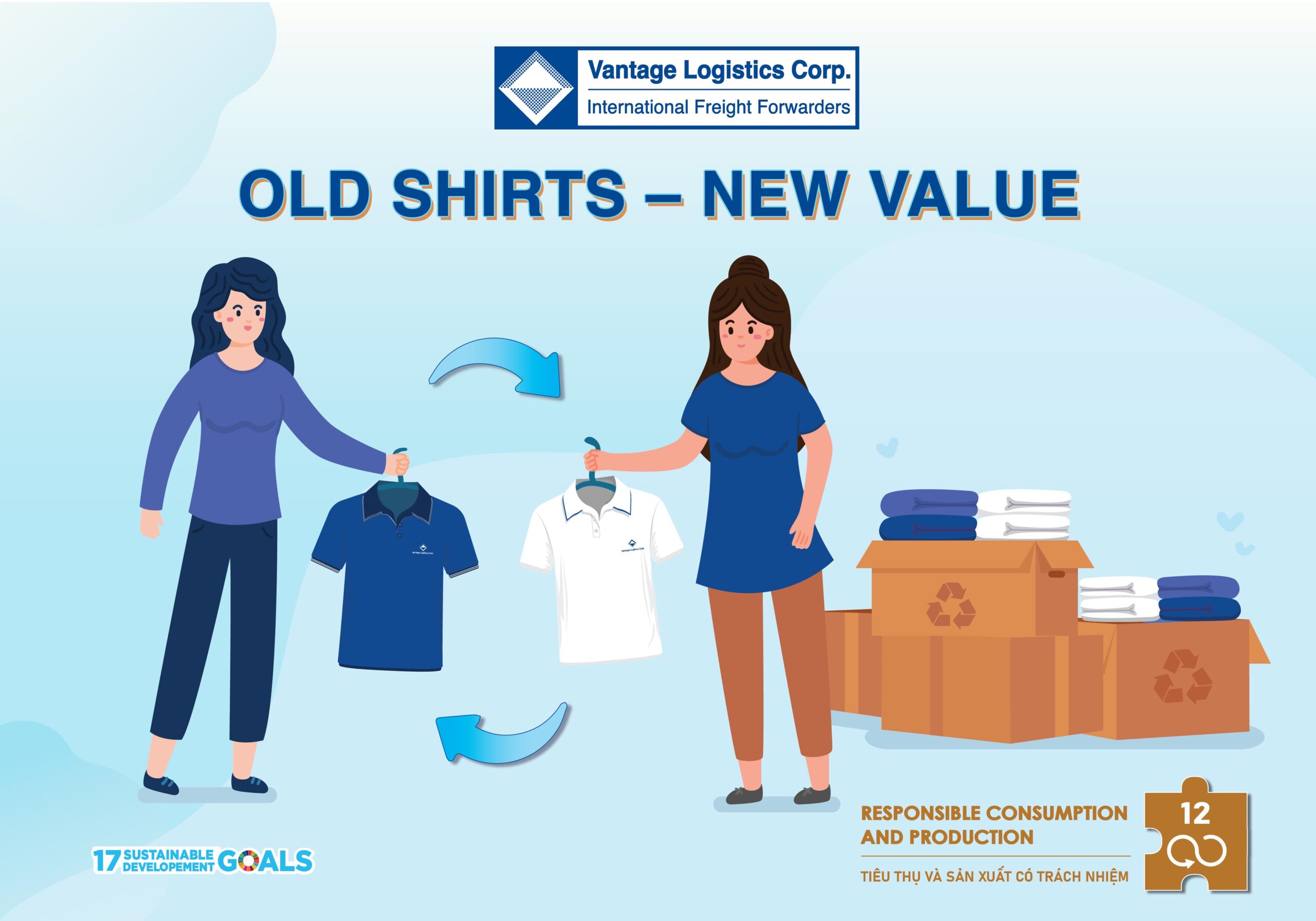
Collect Old Uniforms – Exchange for New Ones” kicks off a sustainable initiative to recycle and regenerate used uniforms, promoting the message: Reuse – Recycle – Co-create a sustainable environment. Continuing its commitment to sustainability and corporate social responsibility (CSR), Vantage Logistics has officially launched the initiative “Uniform Rebirth: Old Shirts – New Value”.This initiative integrates the company’s annual uniform distribution with a circular economy approach, reflecting the company’s ongoing effort to build a corporate culture rooted in environmental action. Every Uniform Has a Story. Every Action Creates a Greener Future At Vantage Logistics, a uniform is more than just professional attire – it represents unity, shared experiences and pride in every journey the team has taken together. This year, instead of letting used uniforms reach the end of their life cycle, we are giving them a new purpose – allowing them to continue contributing in a more sustainable way. Rebirth, Not Waste: Acting for SDG 12 Acknowledging the environmental impact of textile waste, Vantage Logistics is implementing this programme to advance the United Nations Sustainable Development Goal 12 (SDG 12): Responsible Consumption and Production. Used uniforms will be sent to a certified recycling partner in Ho Chi Minh City, where they will be processed into industrial materials such as padding and insulation – with a firm commitment to zero landfill waste. “Each uniform carries the pride of its wearer. By giving these uniforms a second life, we preserve and multiply that value – through our responsibility to the environment and the community. This is how we turn our sustainability commitment into tangible action within our corporate culture”, shared a Vantage Logistics representative. Vantage Logistics: From Strategy to Corporate Culture This initiative is more than an internal campaign – it stands as a clear statement of Vantage Logistics’ brand philosophy and sustainable direction: Supply Chain Responsibility: Demonstrating the capability to manage not only cargo but also waste, creating a closed-loop, sustainable ecosystem. Corporate Culture: Inspiring every team member – from BackOffice to Frontline – to take part in daily environmental action. Trusted Partnership: Strengthening Vantage’s position as a reliable logistics partner for global enterprises committed to ESG and sustainable growth. Vantage Logistics believes that consistent, meaningful actions – even the smallest ones – can drive long-term change. Through the Uniform Rebirth initiative, the company continues to build a greener, more responsible logistics industry, contributing positively to the sustainable future of Vietnam and beyond. Join Vantage Logistics in building a greener future – starting from the smallest actions today!

21/10/2025

View More

Blog

VANTAGE LOGISTICS CONTINUES TO ADVANCE THE 17 UNITED NATIONS SUSTAINABLE DEVELOPMENT GOALS (17 SDGs)

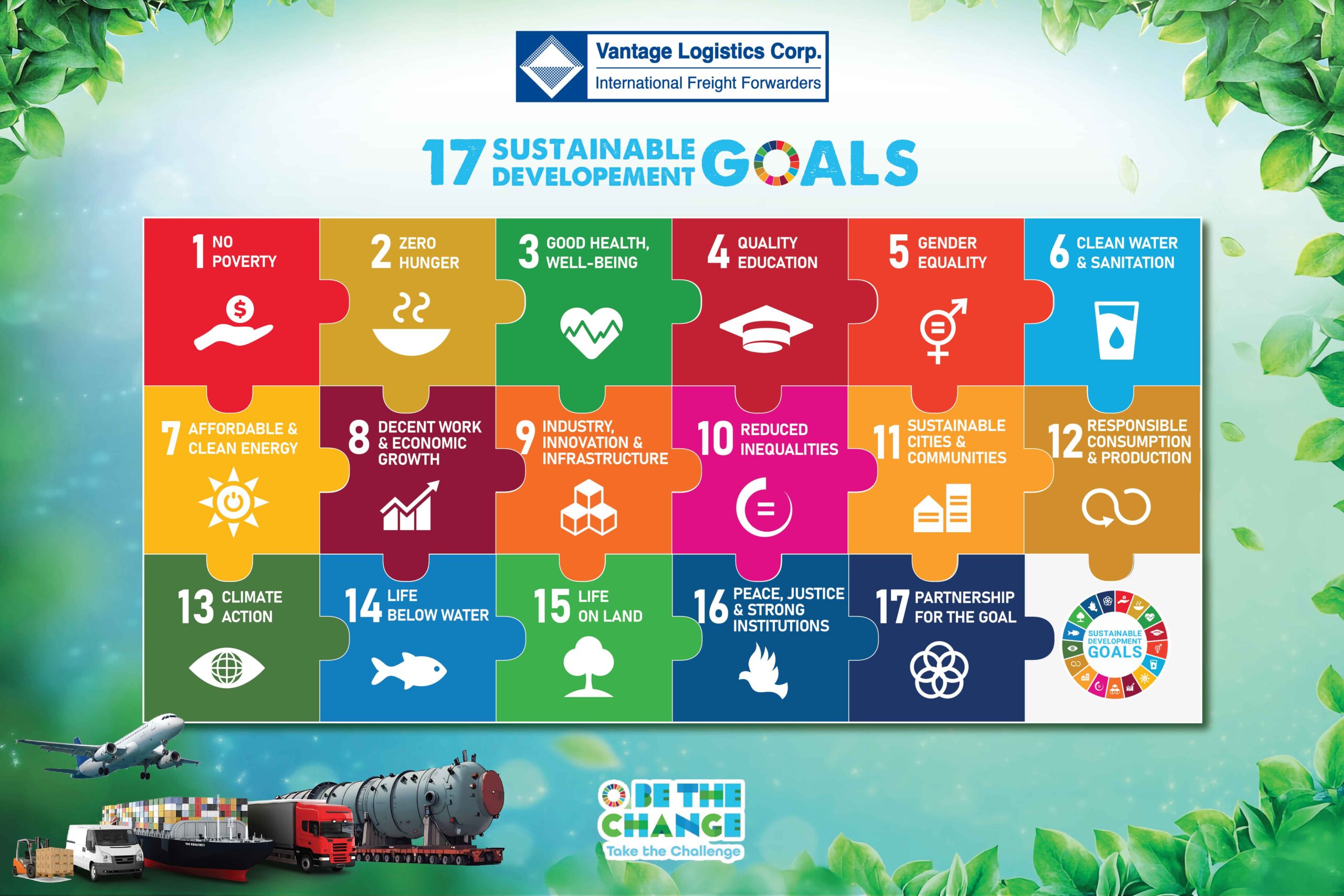
In an era defined by environmental, social and economic challenges, Vantage Logistics reaffirms its long-term commitment to building a modern, efficient and future-friendly logistics ecosystem. The year 2025 marks a critical juncture — the global community is entering the decisive phase to achieve the 17 Sustainable Development Goals (SDGs) set by the United Nations. With only five years remaining before the 2030 deadline, the world faces unprecedented development challenges, including climate change, inequality, financial instability and resource scarcity. According to the 2025 SDG Progress Report, only 35% of targets show clear advancement, while 18% are regressing. This underscores the urgent need for stronger, more coordinated action from both governments and businesses worldwide. THE 17 SUSTAINABLE DEVELOPMENT GOALS (17 SDGs)  Since 2015, Vantage Logistics has aligned its business strategy with the 17 SDGs, embedding sustainability, social responsibility and long-term community value into its operations. As a key player in the logistics sector – a critical link in the global supply chain – Vantage actively drives initiatives such as carbon emission reduction, digital transformation, workforce development and community engagement, contributing to the realisation of the following goals: 1. GOAL 1 – NO POVERTY – END POVERTY IN ALL ITS FORMS EVERYWHERE End poverty in all its forms everywhere Viet Nam has made remarkable progress in poverty reduction over the past 30 years. To further this effort, the government launched the National Target Program on Sustainable and Inclusive Poverty Reduction (2021–2025) under Decision No. 90/QĐ-TTg (2022). This achievement reflects improved living conditions for millions and lays the foundation for narrowing income gaps and promoting inclusive growth. 2. GOAL 2 – ZERO HUNGER Achieve food security and promote sustainable agricultureOnce a food-insecure country, Viet Nam has become one of the world’s leading rice exporters. The Prime Minister issued Decision No. 804/QĐ-TTg to establish the National Steering Committee for the “Zero Hunger” Action Program (2014–2025).Since then, economic and social infrastructure in poor regions, especially in rural, mountainous, and ethnic minority areas, has received strong investment. Income and living conditions have gradually improved, moving closer to the minimum living standard. 3. GOAL 3 – GOOD HEALTH & WELL-BEING Ensure healthy lives and promote well-being for allThis goal aims to ensure healthy lives and promote well-being for all at all ages. Viet Nam is working to end preventable child deaths, control AIDS, tuberculosis, malaria, waterborne and non-communicable diseases, and reduce traffic accidents and substance abuse. Resolution No. 20-NQ/TW (2017) affirms the commitment to improving life expectancy, health, physical stature, and quality of life.All citizens are entitled to equal protection, care, and access to health insurance. 4. GOAL 4 – QUALITY EDUCATION Ensure inclusive and equitable quality education for allViet Nam ranks among the top 40 countries with general education comparable to OECD standards, top 70 in higher education, and around 90th in vocational training. According to the World Bank (2020), Vietnam’s Human Capital Index for education ranks 15th globally, on par with New Zealand, the Netherlands, and Sweden.Key education indicators: 99% of 6-year-olds enrolled in Grade 1 92.08% completion rate for primary education – among the top in ASEAN In SEA-PLM 2019, Vietnamese primary students ranked top in ASEAN in Reading, Writing, and Mathematics Quality education plays a crucial role in fostering human development, reducing regional disparities, and enhancing adaptability in a modern, dynamic society. 5. GOAL 5 – GENDER EQUALITY Achieve gender equality and empower women and girls The proportion of women in the Quốc hội Việt Nam reached 30.26% in 2021, higher than the global average. In 2022, 69% of women participated in the labour force – one of the highest rates in Asia. Việt Nam has maintained a low gender gap in education and healthcare. The Government has enacted the Law on Gender Equality and the revised Law on Domestic Violence Prevention and Control, while implementing programmes that support women’s entrepreneurship, leadership, and access to finance. Gender equality is a driver of social development, enabling the effective utilisation of a diverse and innovative workforce. 6. GOAL 6 – CLEAN WATER & SANITATION Ensure access to clean water and sanitation Viet Nam is actively advancing Goal 6 with strong support from the government and international partners. Numerous programs have been launched to ensure access to clean water and safe sanitation, especially in rural and disadvantaged areas. The government issued Resolution No. 136/NQ-CP to promote sustainable development through improved water infrastructure, sanitation systems, and public awareness. Clean water and sanitation are not only basic human needs but also play a critical role in protecting public health, reducing disease, and improving quality of life – contributing to both community well-being and environmental protection. 7. GOAL 7 – AFFORDABLE & CLEAN ENERGY Ensure access to sustainable and modern energy By 2022, 99.7% of Vietnam’s population had access to electricity, including over 99% in rural areas. Renewable energy accounted for approximately 30% of total power capacity, including solar, wind, and small-scale hydropower. To advance energy transition and promote sustainable development, the Prime Minister of Viet Nam issued Decision No. 622/QĐ-TTg on the National Action Plan and Decision No. 681/QĐ-TTg on the Implementation Strategy. Expanding clean energy helps reduce emissions, enhance energy independence, and drive green economic growth. 8. GOAL 8 – DECENT WORK & ECONOMIC GROWTH Promote sustained, inclusive and productive economic growthTo advance SDG 8, Viet Nam has shown strong commitment to tackling unemployment and promoting decent work. The government issued Resolution No. 136/NĐ-CP (2020), ratified 7 out of 8 ILO conventions, and implemented major labor law reforms. These efforts aim to expand employment opportunities, support the development of a modern market economy, and leverage national strengths to catch up with regional and global progress. 9. GOAL 9 – INDUSTRY, INNOVATION & INFRASTRUCTURE Build resilient infrastructure and foster innovationIn 2023, Viet Nam had over 1,400 km of expressways, with a target of reaching 5,000 km by 2030. Seaports, airports, and logistics hubs have been expanded to enhance both domestic and international connectivity. The Government is accelerating digital transformation, developing high-tech industries, and investing in R&D, which accounts for 0.5% of GDP. Public–private partnership (PPP) models are playing a key role in mobilising social capital, fostering green and sustainable growth. 10. GOAL 10 – REDUCED INEQUALITIES Reduce inequality within and among countriesViet Nam’s GINI coefficient – a key indicator of income inequality – remained at 0.373 in 2022. The poverty rate among ethnic minority households fell to 18.3% in the same year, reflecting steady progress in narrowing income disparities. The Government has implemented broad policies to support disadvantaged regions, expand social welfare, and improve access to education for vulnerable groups. These efforts contribute to building a fairer and more inclusive society. 11. GOAL 11 – SUSTAINABLE CITIES & COMMUNITIES Make cities inclusive, safe and sustainableVietnam’s urban population reached 41.7% in 2023 – rapid urbanisation is creating strong development momentum but also intensifying pressure on infrastructure, the environment, and climate resilience.The Government is implementing the National Urban Development Strategy, focusing on the development of smart cities, green spaces, and modern public transport systems. Major cities such as Ha Noi, Da Nang and Ho Chi Minh City are adopting integrated planning approaches to build more sustainable, liveable, and climate-adaptive communities. 12. GOAL 12 – RESPONSIBLE CONSUMPTION & PRODUCTION Ensure sustainable consumption and production patternsIn Viet Nam, approximately 70% of greenhouse gas emissions come from the energy, manufacturing, and consumption sectors. To address this challenge, the Government has introduced the Green Growth Strategy and the Circular Economy Action Plan 2021–2030, encouraging businesses to upgrade technology, recycle and reuse resources, and reduce waste.Notably, Extended Producer Responsibility (EPR) regulations have come into effect, requiring companies to actively participate in the collection and treatment of post-consumer products.These measures support the transition towards a resource-efficient, environmentally responsible, and sustainable economy. 13. GOAL 13 – CLIMATE ACTION Take urgent action to combat climate changeViet Nam is among the 10 countries most severely affected by climate change. In 2023, economic losses from natural disasters were estimated at VND 10 trillion, with millions of people impacted by floods, droughts, and saltwater intrusion. The Government has pledged to achieve net-zero emissions by 2050, while implementing the National Climate Change Strategy and the National Adaptation Plan to 2030. Key initiatives include investments in renewable energy, disaster risk management, and enhanced early warning systems. 14. GOAL14 – LIFE BELOW WATER Conserve and sustainably use ocean resourcesViet Nam has a coastline of over 3,200 km, playing a strategic role in economic development. However, 60% of nearshore coral reefs are degraded, and an estimated 0.28–0.73 million tonnes of plastic waste enter the ocean each year. To address this, the Government has enacted the amended Environmental Protection Law and the National Action Plan on Ocean Plastic Waste to 2030, aiming to reduce 75% of marine plastic waste.In parallel, marine biodiversity conservation, expansion of coastal protected areas, and promotion of a sustainable blue economy are being implemented to safeguard marine resources for future generations. 15. GOAL 15 – LIFE ON LAND Protect, restore and promote sustainable ecosystemsViet Nam ranks among the 16 most biodiverse countries in the world. However, according to the 2023 report by the Ministry of Agriculture and Rural Development, natural forests continue to face mounting pressure from economic development and climate change. While the forest coverage rate reached 42.02% in 2023, the quality of many critical ecosystems has declined.To address this, the Government has rolled out the National Biodiversity Strategy to 2030, with a Vision to 2050, focusing on conserving special-use forests, restoring degraded ecosystems, and strengthening forest protection measures.Community-based forest management, reforestation initiatives, and mangrove restoration programmes are helping to maintain ecological balance and safeguard terrestrial natural resources. 16. GOAL 16 – PEACE, JUSTICE & STRONG INSTITUTIONS Promote peaceful and inclusive societiesAccording to the World Justice Project Rule of Law Index 2023, Viet Nam ranked 86th out of 142 countries, reflecting steady progress in administrative reform, transparency, and the efficiency of public institutions. The Government has advanced digital transformation in public administration, expanded online public services, and enhanced citizen feedback and oversight mechanisms.Key national programmes on anti-corruption, judicial reform, and law enforcement capacity building are being implemented to foster a fair, stable, and trustworthy governance environment. 17. GOAL 17 – PARTNERSHIPS FOR THE GOALS Strengthen global partnerships for sustainable developmentGoal 17 highlights the importance of building strong partnerships and global collaboration. Every individual and organization plays an active role in achieving the Sustainable Development Goals, helping to create a unified international community. This requires effective coordination and connectivity across: Finance, Technology, Capacity building, Trade Viet Nam actively engages in global initiatives such as JETP, green finance, and fair trade, while promoting public–private partnerships (PPP) to mobilize international resources and knowledge.Multidimensional cooperation is key to addressing global challenges and shaping a sustainable future. Global commitments only create real impact when translated into practical, measurable actions. For Vantage Logistics, sustainability is not a slogan – it is embedded in daily operations. Vantage Logistics – Action and Commitment Vantage Logistics chooses sustainable development not only for business benefits, but for the shared prosperity of society. We believe that every action we take today – from optimising transport routes and investing in greener infrastructure to empowering people and strengthening partnerships, every decision is a deliberate step towards a more sustainable future. “Sustainable growth is not an option — it is our responsibility.”

08/10/2025

View More

Blog

Vantage Logistics & Amazon Global: Strengthening Presence In The Global E-Commerce Ecosystem

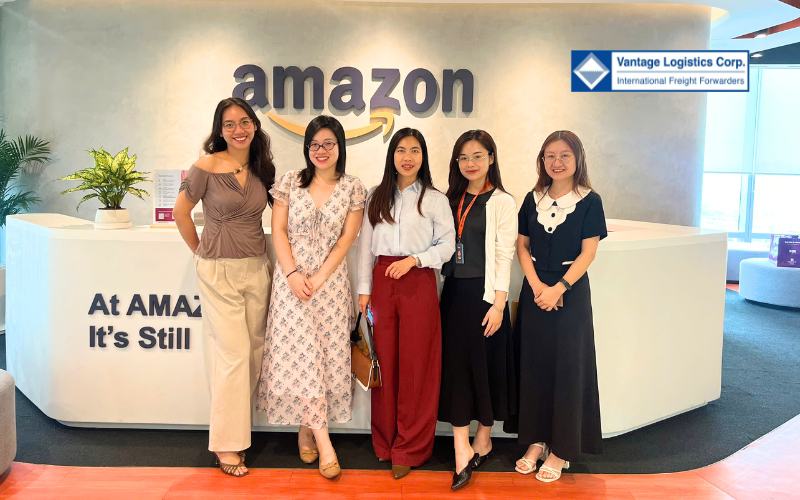
The presence of Vantage Logistics at Amazon’s Hanoi office on 2 October 2025 not only marked a step forward in fostering closer collaboration between the two sides, but also underscored Vantage Logistics’ commitment to supporting and empowering Vietnamese sellers to participate in the global e-commerce ecosystem. Partnering with Amazon, Reinforcing Role in the Global Supply Chain For years, Vantage Logistics has been delivering end-to-end logistics solutions to both Vietnamese and international sellers – from transportation to customs clearance. This event is not a new partnership but an opportunity to reflect on a long-standing collaboration, while raising awareness of the company’s capabilities and commitment to cross-border e-commerce. “The presence of our team at Amazon symbolises our long-term engagement and increasingly critical role in helping Vietnamese sellers expand globally.” – Ms. Hannah, Global Sales Director. Vantage Logistics – Amazon-Standard Logistics Partner With more than 23 years of experience in international forwarding, Vantage Logistics has established a robust network supporting Vietnam’s exporters in reaching global markets. Beyond transportation, the company provides logistics solutions that fully comply with Amazon’s operational standards, empowering sellers to scale on the world’s largest e-commerce platform. Key achievements: Ranked No.1 in Vietnam for export volume to the U.S. (2022) among freight forwarders Listed in the Top 20 international freight forwarders by export volume to the U.S. Hands-on experience with tens of thousands of oversized e-commerce shipments annually Comprehensive solutions for amazon sellers: Door-to-door cross-border shipping via sea, air, and road U.S. transshipment warehouses (LAX, NYC) with direct FBA/FBM connections Amazon-compliant export procedures: HS code consulting, C/O, REX, and packaging standards Cost-optimised shipping with reduced risks of Amazon standard violations Digitalisation & green logistics: VFreight platform, real-time tracking, FTA compliance, and environmental standards Team Presence – A Symbol of Strategic ConnectionThe presence of Vantage Logistics’ representatives at Amazon serves as a symbol of trust, strategic alignment, and long-term commitment between the two parties – working together towards sustainable growth and creating competitive advantages for the Vietnamese seller community on their journey to global expansion. Vantage Logistics: Advancing the Journey of Empowering Vietnamese Sellers Looking ahead, Vantage Logistics will continue to strengthen its support for Vietnamese sellers through: Participation in Amazon Seller Conference 2025 1-on-1 logistics strategy consulting, including tailored programmes for new sellers Enhanced operational connections between Vietnam and the U.S. Vantage Logistics remains committed to expanding operational capacity, deepening cross-border connections, and accompanying Vietnamese sellers on their journey to conquer international markets. Contact Vantage Logistics today for customised logistics solutions to boost your exports via Amazon! → Explore cross-border logistics solutions for sellers at: https://globalsales.vn/ For more information and support, please contact: Email: hannah.sgn@vlc.com.vn Hotline: 0948 121 28

03/10/2025

View More

Blog

Covid In Viet Nam And How It Affect Your Business?

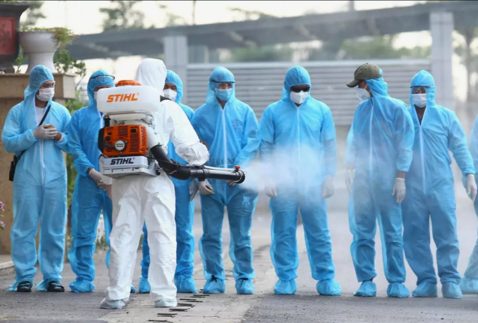
General covid situation in Viet Nam: After nearly one and a half year Viet Nam was pretty quiet in number of Covid cases under 3,000 (only less than 3 cases per 1,000 population), since May, the number started to increase 2 digits, June increased 3 digits and July is increasing 4 digits every day. The North of Viet Nam witnessed the commence of the increasing in May, with a lot of cases discovered in factories and industrial zones, but very soon after that, the South’s new cases become more than the North. The South of Viet Nam is the main area of economy contributing more than 70% value of the country’s business, with Ho Chi Minh city in the center with ports, airports, logistics center, and country head office of many businesses, surrounded by the cluster of industrial provinces: Dong Nai, Binh Duong, Ba Ria Vung Tau where many big factories are located. Covid control regulations by authorities: In order to control covid spreading situation, the authorities impose a lot of regulations and limits on the moving of inhabitants, cargo, and workers. For workers in the factory, authorities impose the regulation of “3 activities – 1 place” (workers will have to work, eat and live in the factory) or “1 route – 2 points” (workers stay in 1 dorm or hostel and being shuttled to factory only, not allow to go elsewhere), in factory and canteen workers need to be distanced min 1.5m from each other. Action of factories: Only few factories can match the requirements 100% and maintain normal activities. Most factories have cut down big part of their activities and only maintain small part whereas can match with the requirements. Some factories due to their conditions, cannot match the requirements and have to stop working. Consequences: Cost: increasing, because workers working and live in such poor conditions and apart from families, they request increase in salary to compensate. On the other hand, those workers who cannot work, still being paid 75% of salary for doing nothing, which is really a burden to factories. Moreover, factories have to pay the cost for arranging food, necessaries and accommodation for workers. Production: decrease, because of difficulties in material supplies, worker’s force and worker’s mental health. What authorities will do next? With the trend of increasing in number of new cases every day, we expect that in near future authorities will impose more severe control method and factories, want it or not, have to find ways to adapt. How this situation will affect your business? Need you to decide fast Since the control methods keep changing with the tendency of more and more severe, we should not hesitate: If you want to buy something, buy it fast, because the price can increase. If you have any cargo ready to delivery, take it fast, because the shipping can be difficult in next day. Freight trend: If the carriers maintain same allocation for Viet Nam, the freight will decrease because products export will be less. If the carriers cut allocation for Viet Nam and switch to China, the freight will maintain at high level now. Airfreight will be increased. What Vantage do Our first advice to all customers is, please try best to adapt yourself to match the new requirements, don’t shut down and wait till the requirements match yourself! No one knows how long this situation will last, so the faster you adapt and resume your manufacturing, the better position you get in front of your customers and competitors. Being well-prepared for many variously difficult situation, Vantage is flexible enough to match with changing requirements, and stable enough to provide a reliable service. Our knowledge and updates effectively help clients in their very specific situation....

21/07/2021

View More

Blog

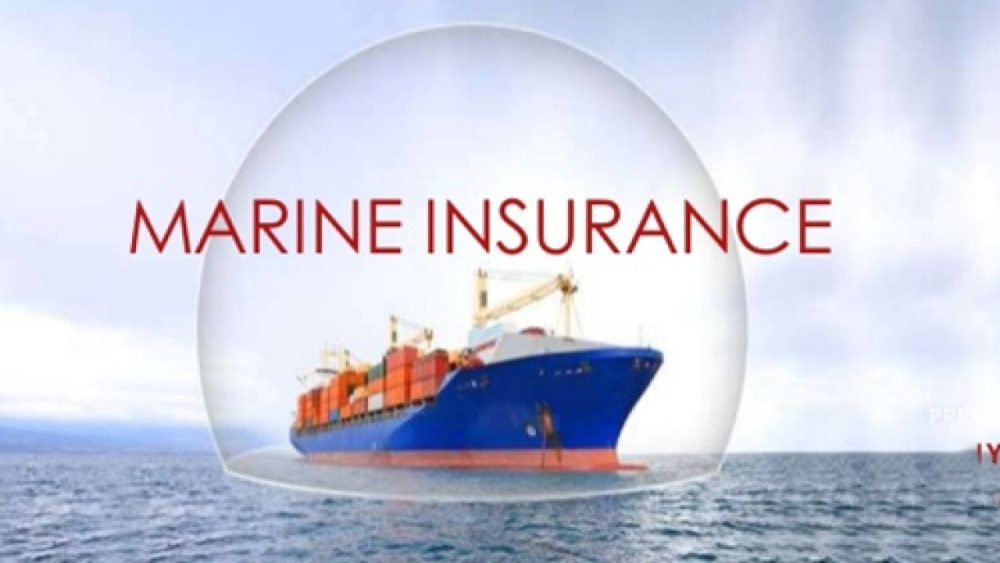
A Case Study About Valued Policy Insurance Through a Dispute Case

Summary A vessel carried 5,500 tons of construction materials from Tuticorin (India) to Male and Foammulah (Maldives). The ship arrived Male on August 9, 2016 partially unloaded and left Male on August 12, 2016. On August 13, 2016, while the ship was looking for a safe anchorage at Foammulah, it ran aground on coral reefs and rocks near the coast. In the evening of September 5, 2016 the ship’s workers began to throw goods into the sea to lighten the ship; by the morning of September 9, 2016, the ship had disposed of nearly 3,000 tons of cargo and on September 14, 2016, the number of goods left on board was 1,882 tons. In the afternoon of September 15, 2016, the rescue tugboat, with the support of ship’s main engine, successfully free the ship, the ship tilted to the right of 8 degrees. After adjusting the tilt, the tugboat pulled the ship to a safe position 0.30S-073.40E but the ship was badly damaged. On September 23, 2016, the ship owner announced to abandon the ship. On October 1, 2016, the ship was towed out of Maldives waters to a position about 90 nautical miles from Foammulah Island, 4,000 meters deep and sank at this location on the same day. The ship-owner bought hull insurance with a sum insured of USD 2.8 million and a vessel value of USD 2.8 million. Therefore, for a total loss, the ship-owner claimed USD2.8 million from the insurance company, but the insurance company argued that this was not valued policy (from the ship owner’s point of view) but value insurance. Therefore, the compensation is only accepted according to the results of price determination at the time of loss (August 13, 2016) – much lower than USD2.8 million. Since it was impossible to negotiate, the ship owner sued the insurance company in court. Summary of the ship owner’s point of view The ship owner thinks that the insured is the ship including the hull, machinery and equipment on board, the insured value is USD 2.8 million, the insurance amount is also USD 2.8 million. The ship-owner and the insurance company agreed to define this case as an estimated total loss. The ship-owner disagrees with the amount of compensation offered by the insurance company under the appraisal deed on the grounds that this is “valued policy” as prescribed at point c, Clause 2, Article 228 of the Vietnam Maritime Code 2005: “A valued policy is an insurance policy in which the insurer agrees in advance the value of the insured subject stated in the policy, in accordance with the insured value, and is used in the settlement of a claim for total loss or partial loss compensation”. In addition, the ship owner also asked the insurance company to pay interest on the amount of USD 2.8 million from the date they should have been entitled to this amount until the date of the judgment. Summary of the insurance company’s point of view The insurance company invokes Article 46 of the Law on Insurance Business 2000: “1. The amount of compensation payable by the insurer to the insured is determined on the basis of the market price of the insured property at the time and place where the loss occurs and the actual extent of damage, unless otherwise agreed in the insurance contract. The cost of determining the market price and the extent of the damage shall be borne by the insurer. 2. The amount of compensation paid by the insurance company to the insured must not exceed the sum insured, unless otherwise agreed in the insurance contract” to refuse to indemnify the full sum insured (is also the value of ship insurance – USD 2.8 million) and considering that this is over-value insurance, it only accepts compensation according to the results of the ship’s appraisal. Summary of the Court and the Procuracy’s point of view Based on the results of studying the case file, through examination, questioning, answering and debate at the court hearing on October 19, 2018; The Court stated: “[… ] the insured value is the actual value of the insured subject. Therefore, the sum insured […] must be based on the actual value of the vessel at the time of the insured event” (page 12 of the Judgment). The Procuratorate held that “[…] the two parties signed an insurance contract that exceeded the value of the insured property […]” (page 10 of the Judgment) – often called over-value insurance – so it was necessary to determine price to obtain the amount of compensation according to the assessment certificate requested by the Court. Therefore, on October 23, 2018, the first-instance judgment was issued from the point of view of not recognizing this as valued policy as argued by the ship owner (plaintiff) and only accepting compensation as the opinion of the insurance company (defendant) according to the results of the valuation that the Court has solicited with the value of the ship at the time of the loss (August 13, 2016) is 41,541,429,000 VND (equivalent to USD 1,779,000 at the exchange rate of 1 USD = 23,351 VND) and the value of spare parts and supplies on board is 5,283,065,575 VND (equivalent to USD 226,246) and the amount of interest is 8,593,418,541 VND (equivalent to USD 368,010). Commentary Article 2.1 of the Insurance Contract states: “This insurance contract is governed by and regulated by the Vietnam Maritime Code. Where the Vietnam Maritime Code has not yet provided for, the International Maritime Insurance Laws and Practices shall apply”. Thus, the Vietnam Maritime Code 2005 (in force at the time of loss) is applied and if there is any shortage, international insurance laws and practices shall be applied. The hull insurance certificate clearly states: “Vessel Value: USD 2,800,000, Sum Insured: USD 2,800,000” and there is no agreement on re-valuation upon settlement indemnify. Therefore, based on Point c, Clause 2, Article 228 of the Vietnam Maritime Code 2005: “A valued policy is an insurance policy in which the insurer agrees in advance to the value of the subject-matter insured stated in the policy insurance, in accordance with the insured value and used in the settlement of a total loss or partial loss claim”, the insurance service in this case is valued policy and the insurance company must pay $2.8 million. The judgment is 15 pages long, the writer only commented briefly on the nature of the incident and hoped to have the opportunity to discuss and clarify more. It is known that on November 2, 2018, the ship-owner submitted an appeal against the judgment of the first-instance Court for appellate trial. Summarize and synthesize by Lawyer Ngo Khac Le (Vietnam Logistics Association — VLA) – Vietnamese-English translation by www.vantage-logistics.com.vn...

02/07/2019

View More

Blog

”Must Be More Than a Good Service” – Vantage’s Lodestar in Business

Good service is not enough; in order to succeed, businesses must be helpful to customers when they are in need. Business has never been easy, especially in today’s increasingly fierce competition. So what do businesses should do to survive and grow in the market? The answer is – Businesses must be helpful to customers when they are in need. The quality of products and services you provide to customers must always be guaranteed to the highest level – But this is just a necessary, but not a sufficient condition for a successful business. Ms.Truong Thi Uyen My, senior specialist of Vantage’s Customs Broker Department, stated: “Over 20 years of serving customers, I realized that the prerequisite for customers to think about us, to choose us among the multitude of competitors is: Are we helpful for customers when they need us?” To explain why, she shared a recent case, by which she and her colleagues have won the trust of customers as well as business opportunity with enthusiastic, timely and effective support when they need it. Solar Park 1 and 2 solar power projects are under same investor and EPC contractor, the logistics part was contracted to 2 service providers: Vantage and another logistics service provider (company “X”); both have to match the very harsh time frame for customs clearance and delivery. According to the original plan, company X was assigned to apply for tax exemption master list, full-set declaration list and customs inspection at site for the two projects Solar 1 and 2, as well as customs clearance and delivery to job site for Solar 1; while Vantage was only responsible for handling customs clearance and transporting to the job site for Solar 2. However, when we start the project, we realize that the way company X handling tax exemption master list, full-set list was not the best way and had potential risk for project owner could not enjoy tax exemption for many equipment that they should be able to enjoy legally, Vantage had proactively proposed our solution and got approval from the investor and EPC contractor to provide full logistics service for Solar 2 project (instead of responssible for customs clearance and delivery to jobsite as originally planned). Since the first shipments arrived, Vantage’s team always proved our expertise on customer service focusing, ensuring timeliness, safety and accuracy for all tasks that we handled. Thank to this, Vantage gained more and more trust from customer; we were regularly being asked to give advice or support to company X when they encountered difficulties in their scopes of work. Then there was an unexpected incident occurred. Company X had made a rather serious professional mistake in the process of customs declaration which leaded to the fact that they could not prove the integrity of the goods during transportation; resulting in the customs deciding to hold 13 containers of equipment at the port for further inspection, while the project was deadly in need of these containers. Company X was not capable to convince and prove the intergrity of goods with customs. Customer asked Vantage to help them solving this problem. This was meaning that we had to help our “competitor” doing their job. It also meant that we needed to help without knowing about our “reward”. But we don’t hesitate. When our customer needs help, just do it and give customer our highest effort, using our rich experience and knowledge accumulated through various types of projects to prove and convince customs officers about the integrity and correctness of goods. Late on same day, Vantage got customs’ release and let company X to pick up and deliver shipment to jobsite. After this incident, the customer recognized how benefitable Vantage’s service is, and eventually, had decided to shift all scope of both projects Solar 1 and 2 to Vantage....

27/06/2019

View More

Blog

The Key to Long-Term Success: Building and Maintaining Client Trust

Nothing is as important as the trust of clients. Vantage believes that nothing is as important as the trust of clients; and gaining someone’s trust has never been an easy job. Mr. Pham Minh Nhut – Branch Director of Vantage in Da Nang city – shared about how his team and himself have made outstanding efforts to have the trust and appreciation of our client. Gaining client’s trust has never been an easy job In October 2018, a client who is speciallized in exporting automotive components to South Korea, China and Myanmar started to use trucking and customs clearance services of Vantage for their export shipments. The job is pretty simple and many logistics providers definietely can handle. However, with our working spirit “Every customer is served as our unique customer”, we take care of each individual set of shipping document, each individual customs declaration, each truck, the serving attitude of all involved personals and teams, always deliver the work more than expected. Eventually, our Vantage Da Nang team gain the trust from customer, they assign us more and more jobs, and then, including the jobs that traditionally they fix with just several service providers (who are still delivering a fair service). Moreover, their appreciation to Vantage also leads to a lot of precious recommendation for Vantage to do business with many of their buyers and partners, helping Vantage to expand our business network. And up to now, whenever there is any demand, issues, questions about logistics, the first company this customer come to is Vantage. Mr. Nhut said: “Everything we do, we do it on customer’s benefit. When we really care about our customers, and treat their problems as our own problem, their success as our own success, we don’t feel our job is a burden anymore, it is really our happiness, our creation, our strong connection. We “nourish” our client’s trust by continuous excelling at everything we do, as if taking care of a seedling, and our harvest is their trust and appreciation for us.”...

12/06/2019

View More

Blog

Role of Business in Environmental Protection

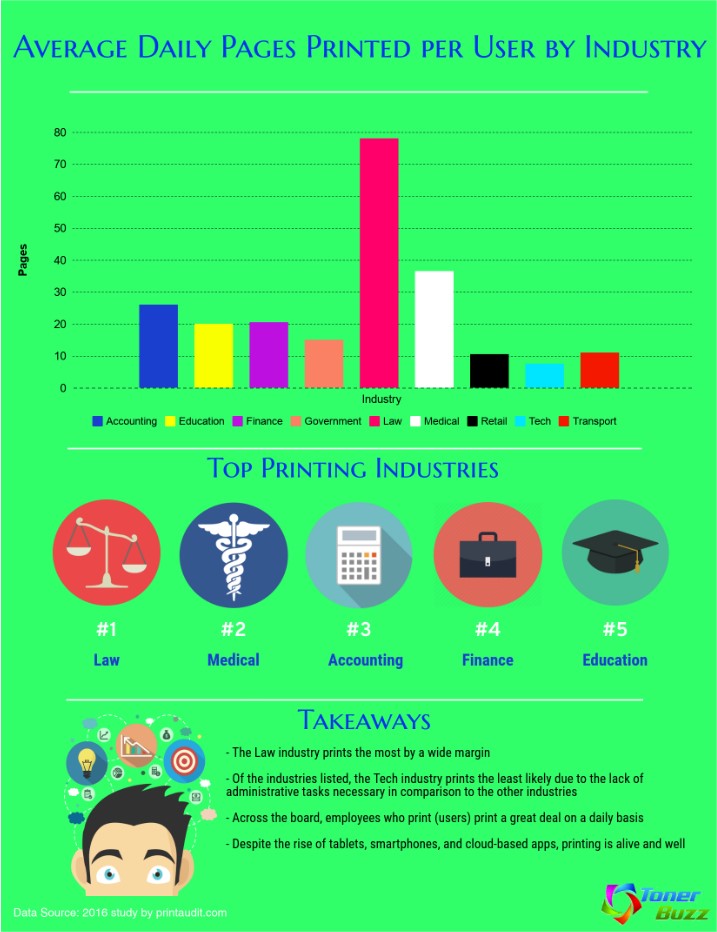
Businesses hold a very important role in the economy and society. But there is a fact that, pollution is also mainly caused by businesses, so limiting and reducing pollution must also be from businesses. Taking responsibilities of businesses in environment protection is a key solution to solve current environmental issues. Besides businesses that directly impact environment such as exploitation of natural resources or waste discharge from plants and factories, office activities though seem to be “innocent” but do have significant impact, too, especially in industries with high printing demands such as law, health, accounting, finance, education… (Sources: Tonerbuzz – 2017) Therefore, along with investing in green technologies, seeking alternative sources of materials to reduce the impact of business activities on environment, businesses also need to impose appropriate solutions such as  using energy reasonably, reducing unnecessary usage of printing paper, which not only saving costs but also reducing the explotiation of natural resources, especially forest resource – the main raw material for paper production. At Vantage, below is what we are doing. We follow 3R method: Reduce – Reuse – Recycle when using paper at our office: – Reduce: + Only print when necessary. + Print two-sided documents. + Go digital. Use e-mail instead of paper memo. + Proofread! Thoroughly check the document for typos and other errors to avoid having to print again. + Fit into a single page. Reduce the font size, shrink the margins, reduce the space taken up by the footer and header. Check the print preview before printing to ensure the integrity of the content. – Reuse: + Reuse paper that is clean on one side for in-house drafts, notes and photocopies. + Reuse cardboard boxes of the right size to keep a stack of such reused paper, clean side up, near printers and copiers. + Conduct research online and at libraries rather than ordering lots of written materials. + Share periodicals with associates instead of receiving multiple copies. – Recycle and buy recycled: + Collect office paper, newspapers, cardboard, magazines, and colored paper scrap wood and send for recycle. + Buy copier paper, paper towels, tissues, and toilet paper with “post-consumer recycled” content. The higher the post-consumer content, the greater the amount of materials that have been through the entire recycling process – and the greater the savings of precious natural resources and energy. Besides, the development of information technology nowardays also helps employees at Vantage completing their tasks with less paper. Take advantage of email, public folders, open sources to store documents, vouchers, receipts…; only print when really needed; this help us minimize paper usage, while also saving time and costs on operation. Preliminary statistics at our company show that, by using cost-effective measures and using reasonably available technologies, we can reduce paper consumption by 10-20%. Each of us understands one thing, the responsibility of protecting the environment does not belong to any individual or organization, but all of us. Living and doing business environmentally responsible, is also responsible for ourselves, as well as the future generations. Environment’s Tomorrow Needs Our Participation Today....

11/06/2019

View More

Blog

Because every shipment, whether big or small, must be cared for

Each shipment is not only the goods, but also a client’s trust. When client hand over their shipment to a logistics service provider, they are also giving their trust. A shipment is transported promptly and safely will bring competitive advantages and reputation, otherwise, could be some negative effects. Therefore, clients would only choose reliable and reputable logistics service providers that can bring them the best quality services. Besides timely deliver, optimal transportation cost, the safety for goods is one of the vital factors that drive client’s determinants when they choose logistics partner.  At Vantage, each shipment must be cared for, no matter how big or small it is As an international logistics company, Vantage understands the roles and responsibilities of a logistics service provider to clients and their goods. Each of Vantage’s employees, regardless of their position, must not only be bring optimal services to meet client needs, but also do their work with outstanding efforts, take full responsibility in each of their task even the smallest one. To us, every shipment, whether it is several tens of tons or only few kilograms, worth several hundred thousand dollars or only worth a few dozen dollars, must to be carefully handled. When receiving any shipment from clients, the first thing that Vantage do is to check carefully the detailed information and specification as well as special instruction; in order to provide the most optimal plan on time, cost and safety for goods at the highest level. Below is a typical case of how mastering information of shipment helped us on proactively handling arisen problems. In the beginning of April, 2019, Vantage received information about the shipment of a set of integrated procedure trainer for airbus A321 which imported by Vietnam Airlines from France. This equipment shipment is packed in 6 wooden pallets with total volume of 1,784kgs. Vantage is required to receive the shipment at the warehouse in Tan Son Nhat International Airport and deliver to consignee’s nominated warehouse. Shipper’s logistics company provided information of the shipment; yet, there was no special note / instruction attached. Recognizing that the commodity is very special, Vantage’s import department has requested for more specific details and instruction. The packages were also attached with a shock watch (shock warning) as well as ‘Handle with care’ label. As soon as receiving cargo discharged from airplane, Vantage immediately checked the condition of cargo and found that 3 out of 6 shock watches had turned red. Vantage’s person in charge immediately contacted both origin and destination sides to report and request for instruction, as well as to prepare the solution basing on our technical team’s knowledge and experience. After our proposed method is approved, the shipment was transported at 200% of carefulness and finally safely delivered to consignee’s assigned warehouse. For specific cargo, we know that understanding the cargo nature and strictly follow transportation instruction is a must for a safe delivery....

20/05/2019

View More

Blog

Returning Goods: Concerned Factor in International Trade

Returning goods/ Re-exporting goods: Concerned Factor in International Trade In international trade, smooth process of import-exporting cargo is one of the key factors of success. To achieve that, traders need to work on a lot of things: capital, products, applicable regulations and policies of both origin and destination countries, choice of reliable logistics partners… Especially the product-related factors, if the required specifications or product quality are not matched, it is easily resulted to the situation that the buyer denies shipment; or the buyer has to return the goods after receiving; hence, causing negative effects to business activities of both seller and buyer, and costs incurrence. Sharing about this topic, Ms. Theresa – Vantage’s Customs Expert – talked about a case that she and her colleagues had processed for our customer before 2019 Tet holiday. Theresa – Customs Expert of Vantage’s Cusbrok Department One day at the end of August 2018, a shipment from Penang, Malaysia was discharged at Hai Phong port, Vietnam; however, since contracted-particulars were not matched, the buyer denied it. Seller and buyer had several negotiations but could not reach the agreement that buyer will accept cargo, eventually the shipment was forced to return. And due to some reasons, the shipment was not returned until end of December 2018, incurring a demurrage amount of more than USD7,200. On December 26, 2018, seller’s logistics company contacted Vantage, asking for assistance to re-export that shipment to Malaysia. Being assigned to assist them, Theresa immediately took action, contacted all related parties to obtain details and worked out a solution. Bearing in her mind that the faster the processing of return is, the more cost she could save for customer, Theresa had fully prepared all relevant information and documents, just waiting for official confirmation from the seller and their logistics company’s confirmation to proceed. On January 22, 2019, Theresa finally received confirmation from Malaysia to proceed the re-export tasks. Theresa and her team ran to fulfill the tasks in the rushing period, targeting themselves “no mistake – no delay” to load the shipment onboard before the long Lunar New Year holidays to cut down demurrage cost for customer. Thus, with professionalism and spirit of ‘supporting customer first’, on January 30, 2019, Theresa and her colleagues had completed all necessary procedures (obtaining signature and stamp from related parties is the most time-consuming in this task) and loaded the shipment onboard to return to seller. Theresa added that re-exporting procedure is never simple as many people may think. It involves a lot of complicated documents, relations, problems, costs. If seller and buyer are not co-operative, the shipment could easily be stuck for months, cost incurred easily reaches to thousands USD, and even much more if the cargo is in reefer container. To avoid this situation, the seller needs to check carefully the status and particulars of goods and other contracted conditions before shipping out; meantime, the buyer should check carefully the information before receiving the goods. In case the buyer denies cargo due to any reason, both seller and buyer should co-operate to return shipment as smoothly and quickly as possible, avoiding unnecessary cost incurrence, especially demurrage / storage cost which is considerably high (average 60-70USD/day). If you have any inquiry on returning goods / re-export procedures, our Customs Expert – Ms. Theresa/ Email: theresa-vn@vantage-logistics.com is willing to assist....

02/05/2019

View More

Blog

The Success of Customer is also the Success of Vantage.

The Success of Customer is also the Success of Vantage. People normally think that business goal is to make as much profit as possible. But at Vantage, we don’t. We’ve been building up a company culture with specific core values, of which, our business goal is to place our customer and their success to the top priority. “The Success of Customer is also the Success of Vantage” is our main working spirit which each employee, regardless of their position, is proud to perform. Let us tell you about one of the people who have been contributing to the success of Vantage as this spirit. Ms. Mai, a member of Customs Clearance Service (Cusbrok) Department at Vantage, has been working here for almost 6 years. Those 6 years were the enough time for Mai to grow up from a fresh new document staff who was still unfamiliar with profession, confused with a ton of complicated documents at the beginning, to a professional Customs Broker who is confident to consult, handle and support customers in all cases even the most difficult ones. When being asked about how Mai thought of her work, she immediately answered: “It’s tough but I love it, especially when successfully dealing with problems that our clients couldn’t solve even how hard they tried. This feeling is so excited.” Then Mai told us about an urgent shipment that she and her team have just successfully handled for client. At 6:00PM that day (our official working time ends at 5:30PM), Mai received an email from Sales Department of Vung Tau branch about the client’s shipment that will be transported by airfreight with cut-off time at 9:00AM the next morning. If we miss this flight, the goods must be waiting for two days for next available flight. This is almost an impossible task while the time from receiving information to the time completing all customs clearance procedures is too short. This client is a big company in the oil & gas industry, due to the industry’s specificity as well as the requirement of specialized equipment, the urgently importing and exporting equipment often happen, because if the lack of needed equipment occurs, the oil rig cannot be operated, resulting in huge costs, from 150-300 thousand USD per day. This is not a small number, Mai knew that, by the responsibility and the mindfulness of a professional, she must do the best to support her client in this case. Mai immediately turned on the ‘emergency button’ in her mind and rushed to work. What is commodity name? HS code? How many packages? How are they packed? Shipping mark and label? Gross weight? Net weight? Value? Customs declaration criteria? Consignee detail at destination? Mai reviewed all the documents, checked each line of information to ensure there was no mistake when doing online declaration for this shipment. Nearly 9:00PM that evening, Mai left the office after she had prepared everything, anxiously waited for the next day to do online customs declaration. In the early morning of the next day, Mai received the result from online customs clearance system, the shipment was classified to green line (exempted from physical inspection), Mai and her team could not hold back their joy – the shipment was successfully customs cleared before cut-off time. Mai loves and cherishes her work, glad that what she and her colleagues have been trying to do every day can help clients solve their problems. Mai – The main character of this article. At Vantage, when clients encounter difficulties and need us, we always say “YES”. Because Mai and all of us at Vantage always believe that, our clients succeed, we succeed....

25/03/2019

View More

Blog

Us – China Trade War: Chance For Vietnam?

US-CHINA TRADE WAR The U.S. and China are currently embroiled in a trade dispute, with both countries slapping additional duties on each other in the past few months. The U.S. has imposed extra tariffs on $250 billion worth of Chinese imports — with U.S. President Donald Trump threatening to impose levies on all $500 billion worth of goods from the Asian giant. Beijing has retaliated with additional tariffs on $110 billion worth of U.S. imports, and is threatening qualitative measures that would affect US businesses operating in China. How does US-China trade war affect to global trade? The US decision to impose tariffs on Chinese imports marked a serious escalation in its hostilities with Beijing over trade. Yet economists believe protectionist measures will have only a modest impact on global growth — provided the bilateral conflict does not turn into an all-out multilateral war. Growth in trade has been slowing for a while International trade in goods has already fallen as a proportion of global output in recent years, despite the upswing in the world economy. This is partly because of currency effects and changes in commodity prices, but manufacturers are also becoming less reliant on imported inputs and popular hostility to globalisation may also be playing a part, with trade disputes and the use of anti-dumping measures on the rise even before the latest rounds of tariffs. So far, tariffs affect only a small proportion of global trade Although the US-China conflict now looks likely to affect the vast majority of the goods traded between the two countries, it makes up a modest proportion of global trade. Even if the US acts on all the threats it has made so far, only around 5 per cent of global imports would be affected. For most countries, trade ties with near neighbours are the most important World trade is largely concentrated in 3 regions: North America, Europe and East Asia, with a large share of trade being intra-regional. Emerging markets may benefit if the dispute leads China to trade more with neighbours in South-East Asia International trade is largely composed of trade flows between rich countries and the East Asian region but developing countries’ trade with China is increasingly important. A big question now is whether other countries in south-east Asia are able to benefit from greater integration with China as existing trade flows are diverted to new markets, and if Chinese manufacturers seek to shift production to countries not affected by tariffs. TRADE WAR MAKES VIETNAM A HAVEN In the last few years, driven by rising labor costs, the need for diversification, and the government’s focus shifting from labor-intensive sectors to high-tech industries, Chinese as well as foreign firms operating in China have slowly shifted their manufacturing activities to Southeast Asia, especially Vietnam. In addition to these factors, the escalating trade war between the US and China that has already seen additional duties being imposed on US$500 billion worth of goods, accelerated the trend of foreign investors realigning their supply chains. Routing goods through Vietnam Due to its geographic proximity, lower wages, skilled labor, trade agreements, and regional connectivity, Vietnam has emerged as one of the most preferred alternatives for manufacturers. The Vietnamese government had anticipated that due to higher tariffs on Chinese products, the manufacturers may try to reroute goods through Vietnam in the short term to maintain exports. Hence, the government has taken several steps to ensure the origin of imported and exported products. For example, Decree No. 31/2018/ND-CP which is in effect since March 2018, supplements new regulations related to the origin of exported goods and imported goods. Due to product origin issues, the US government in March 2018 hiked tariffs on steel products from Vietnam that originated from China. This proves that Chinese exporters may use Vietnam to reroute goods in the short term, but it is not recommended. Rather than doing so, they should focus on other long-term risk mitigating strategies to minimize their exposure to the ongoing trade disputes. Minimizing risks Manufacturers based in China can minimize risk by moving to other cost-effective locations in Southeast Asia, including Vietnam. This would require finding new suppliers, renegotiating contracts, and moving assets which will be time-consuming and costly. In the short term, companies can add new suppliers and apply tariff engineering strategies if possible to mitigate trade risks. Review tariffs Before considering moving out of China, firms need to closely review the tariffs and ensure correct HS code classification for their products. In addition, they also need to focus on customs valuation to determine the value of imported goods. This will not only help in correctly determining the increased cost but also provides an opportunity to employ tariff engineering strategies. Moving to a new location Manufacturers can move their entire manufacturing operations or a part of it to a third country, which is not facing higher tariffs. In the short-term, they can move a part of their manufacturing process to a third country, which will change the HS code classification of the semi-finished goods produced in China and may attract lower tariffs. Eventually, they need to focus on completely relocating their production lines to a third country, such as Vietnam. Already in the last few years, major electronics firms such as Intel, Foxconn, LG, and Samsung have moved to Vietnam due to higher wages in China. In addition, several retail brands such as Nike, Adidas, and Puma have also shifted to Vietnam and Cambodia to reduce costs. The ongoing trade war will continue to accelerate this trend. Why Vietnam In addition to its geographic proximity, Vietnam offers several advantages for manufacturers planning to move outside China. Lower wages Vietnam’s average wages are much lower than that of China, which has grown steadily in the last few years. Wages are slightly more than half of those in southeast China. Skilled labor Labor quality along with young demographics offers manufacturers a stable workforce. Free trade agreements Vietnam is part of several Free Trade Agreements (FTA), which gives it a competitive advantage compared to other countries in the region. It is not only part of the FTAs as a member of ASEAN but is also party to major bilateral agreements. The two recent FTA’s currently under review are the EU Vietnam FTA and the Comprehensive and Progressive Agreement for Trans-Pacific Partnership (CPTPP). Border economic zones Due to its common border, both countries have established several China-Vietnam trade zones, such as the Longbang-Tra Linh trade zone and the Guangxi Pingxiang Integrated free trade zone along the borders. Further trade zones are planned near the border as they are close to Chinese manufacturing hubs in Guangdong province and the Yangtze River Delta. Ports and maritime links Vietnam, located along major global shipping routes, has 44 seaports as of 2017 with a total capacity of 470-500 million tons per year. Although the Chinese port capacities are much higher, the Vietnamese government has started to invest billions in new ports and increasing the capacity of existing ones. Major ports include Hai Phong, Danang, Qui Nhon, and Ho Chi Minh City. Future ports under development include My Thuy International Seaport, Lien Chieu Seaport, and Lach Huyen International Gateway Port. Rail/road connectivity with China Due to its common border, rail and road connectivity between China and Vietnam is a key component of the bilateral trade between the two countries. Railway lines between Kunming – Hai Phong and Nanchang City-Hanoi, along with the Kunming-Hai Phong Transport Corridor, which is already in operation, will further increase connectivity between the two nations. Going forward Vietnam will continue to attract labor-intensive sectors from China due to its lower wages and existing infrastructure capabilities. However, the country needs to focus on further developing its supply chains, supporting industries, and export infrastructure to attract the big-ticket investors who are looking for alternative sources and locations for manufacturing. HOW VANTAGE LOGISTICS CAN HELP? In Viet Nam, Vantage can assist clients from the very early stages by help them to: Get VISA to come to Viet Nam and other arrangements to survey the possibilities Recommend the suitable location for their factory Connect with good consulting companies for legal and other consulting services Connect with authorities to obtain investment license Get tax exemption master list for projects that belong to favorable policy of Viet Nam Route survey for transportation, customs clearance and delivery, all logistics services for factory moving and material, products moving when the factory operates… In the addition, we have our own equipment to ensure safe and competitive price, and our long list of project experience proves all our capabilities. OUR EXPERT ALWAYS HERE TO ASSIST: Mr. Philip Diep – CEO: Email: philip-vn@vantage-logistics.com.vn Ms. Florence Lam – President: Email: florence-vn@vantage-logistics.com.vn Mr. Harry Phan – President, Global Project Development: Email: harry-vn@vantage-logistics.com.vn...

17/12/2018

View More
1 2 3