简体中文
简体中文 Tiếng Việt
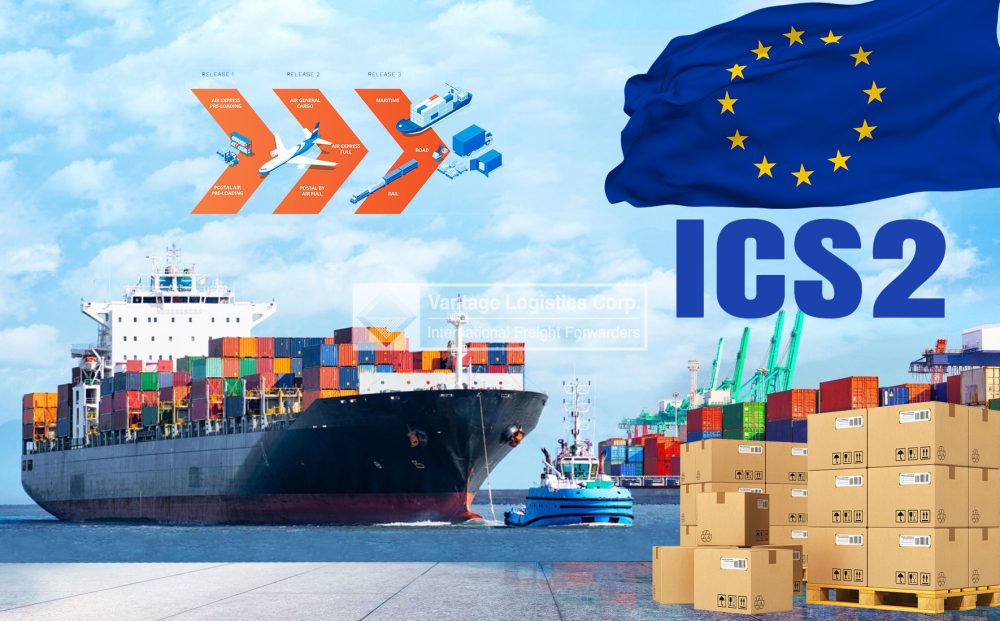
Since March 2021, the Import Control System 2 (ICS2) has been a mandatory tool for managing the flow of goods into the European Union (EU). Non-compliance with ICS2 requirements may lead to cargo being held, delayed at customs, or rejected – causing serious disruption to supply chains and damaging business credibility.
Real impacts of ICS2 on supply chains to the EU
Since March 2021, the Import Control System 2 (ICS2) has been a mandatory tool for managing the flow of goods into the European Union (EU). Non-compliance with ICS2 requirements may lead to cargo being held, delayed at customs, or rejected – causing serious disruption to supply chains and damaging business credibility.
Effective from June 3, 2024, all parties involved in the supply chain to the EU – including exporters in Vietnam – are required to comply with ICS2 filing procedures.
What is ICS2?
ICS2 is an electronic declaration system that enables EU customs authorities to collect shipment data before the goods arrive at the EU border. Its main objectives are to:
- Enhance risk management and early detection of violations;
- Prevent illegal or dangerous goods from entering the EU;
- Safeguard the internal market from security threats and trade fraud.
ICS2 implementation roadmap by phase and transport mode
| Phase | Effective date | Applicable entities |
|---|---|---|
| Phase 1 | From 15/03/2021 | Express carriers, postal operators outside the EU |
| Phase 2 | From 01/03/2023 | Forwarders, logistics providers, air carriers |
| Phase 3 | From 03/06/2024 | All ocean, rail, road carriers and EU importers |
What information must be declared?
The ICS2 declaration (Entry Summary Declaration – ENS) must include:
- Description of goods and HS code (minimum 6 digits);
- Country of origin;
- Shipper and consignee information;
- Routing and transport mode;
- Shipment details (weight, packaging, booking info, etc.).
All data must be submitted in the correct XML electronic format, with no errors or omissions. Invalid data will result in the goods being denied clearance.
Consequences of non-compliance
- Customs delays: Cargo may be detained, subjected to further inspection, or returned.
- Increased costs: Storage fees, data correction charges, and penalties may apply.
- Reputational risks: Late deliveries reduce trust with EU customers.
- Lost contracts: EU corporations prioritize partners who fully comply with legal standards.
ICS2 transition support timeline
The EU has announced a transition period for businesses to adapt:
- 03/06/2024 – 04/12/2024: Ocean and inland waterway carriers
- 04/12/2024 – 01/04/2025: Secondary filings for maritime shipments
- 01/04/2025 – 01/09/2025: Road and rail carriers
!Note: This is a technical transition phase, not a grace period for exemption.
What should businesses do now?
- Review and standardize your data process
Identify all ICS2-relevant data touchpoints within your export chain. - Train your logistics personnel
Ensure staff fully understand ICS2 requirements – manual or ad-hoc filing is not acceptable. - Partner with a professional forwarder or customs agent
ICS2 demands advanced technical knowledge and legal accuracy – work with experienced providers. - Audit your IT systems and integration capability
Automation and seamless data exchange help minimize risks and avoid costly mistakes.
With multi-route international shipping capabilities and deep understanding of EU regulatory systems, Vantage Logistics offers comprehensive ICS2 filing services, including:
- Advisory and data standardization;
- Accurate and timely ENS submission in the correct format;
- Real-time monitoring, updates, and adjustments throughout shipment transit;
- IT integration support to link your internal system with ICS2.
We understand that every minute of delay is a lost opportunity.
Vantage is committed to helping your cargo reach the EU on time, in full compliance, and without disruption.