MARKET UPDATES

Market updates

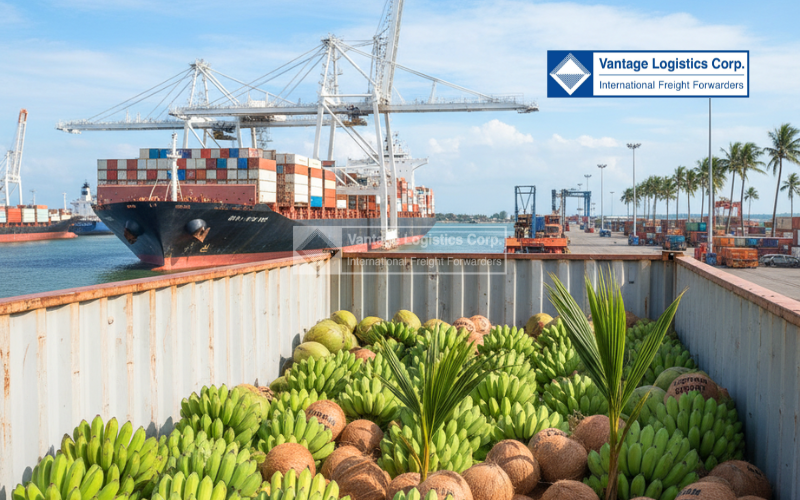
Coconut and Banana Exports Surge: Vantage Logistics Powers Vietnamese Agriculture’s Global Expansion

Vietnam’s coconut and banana exports are accelerating in major markets such as the United States, Japan, and China. Alongside the expansion of market opportunities, the demand for cold chain logistics and compliance with international standards has become increasingly stringent. This is the moment when exporters need a logistics partner with proven capacity and experience to ensure product quality, on-time delivery, and business reputation. Vietnamese Coconut: The U.S. Surpasses China – Unlocking New Growth Potential In the first seven months of 2025, Vietnam’s coconut export value reached approximately USD 306 million, up nearly 40% compared to the same period last year. Notably, the United States overtook China to become the largest importing market, accounting for USD 82 million and 27% of total export value. This growth reflects Vietnam’s ability to meet stringent technical standards, packaging requirements, and traceability regulations. Behind these results lies a specialised logistics ecosystem that plays a decisive role in preserving product quality throughout the export journey. Vietnamese Banana: Strong Position in China – Breakthrough in Japan In 2024, Vietnam exported 625,000 tonnes of bananas to China with a total export value of USD 261 million – up 28% in volume and 7% in value. This achievement positioned Vietnam ahead of the Philippines as China’s largest banana supplier. Meanwhile, exports to Japan grew nearly 14-fold compared to 2019, reaching 33,000 tonnes in 2024. In July 2025 alone, the export volume doubled year on year, signalling stable demand and expanding market potential. To keep up with growing export orders, scheduled weekly cold chain transportation plays a crucial role in ensuring shipments arrive on time and in optimal condition, with zero compromise on quality. Vantage Logistics: Specialist Logistics Partner for Fresh Produce With more than 23 years of experience, Vantage Logistics delivers specialised logistics solutions for perishable goods, including: Cold Chain Transport – Maintaining stable temperature from origin to international destinations. Export Procedures and Phytosanitary Certification – Supporting exporters in complying with the strictest market regulations. Real-time Shipment Tracking – Enabling customers to monitor cargo conditions every step of the way. Beyond transportation, Vantage Logistics acts as a strategic partner in every stage of the export journey — protecting product quality, optimising costs, and helping businesses expand sustainably into global markets. Driving Vietnamese Agriculture Forward Vietnamese coconuts are gaining ground in the U.S., while bananas maintain strong growth momentum in China and Japan. In this journey, Vantage Logistics stands as the trusted bridge ensuring quality, speed, and reliability for every shipment. Contact Vantage Logistics to optimise your export operations and elevate the global value of Vietnamese agricultural products! Source: VnExpress – Article titled “U.S. Surpasses China to Become Vietnam’s Largest Coconut Importer” accessed on 16 October 2025.

17/10/2025

View More

Market updates

Northern Europe Logistics Crisis: Rotterdam and Antwerp Paralysed by Strikes – Businesses Must Act Now

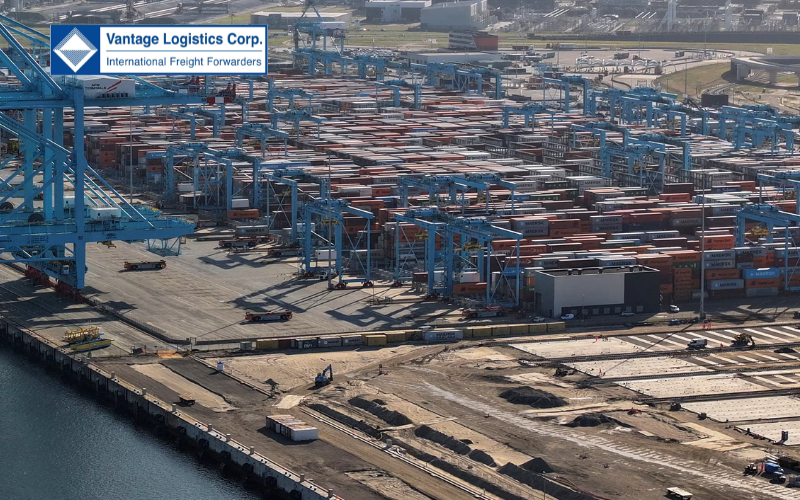
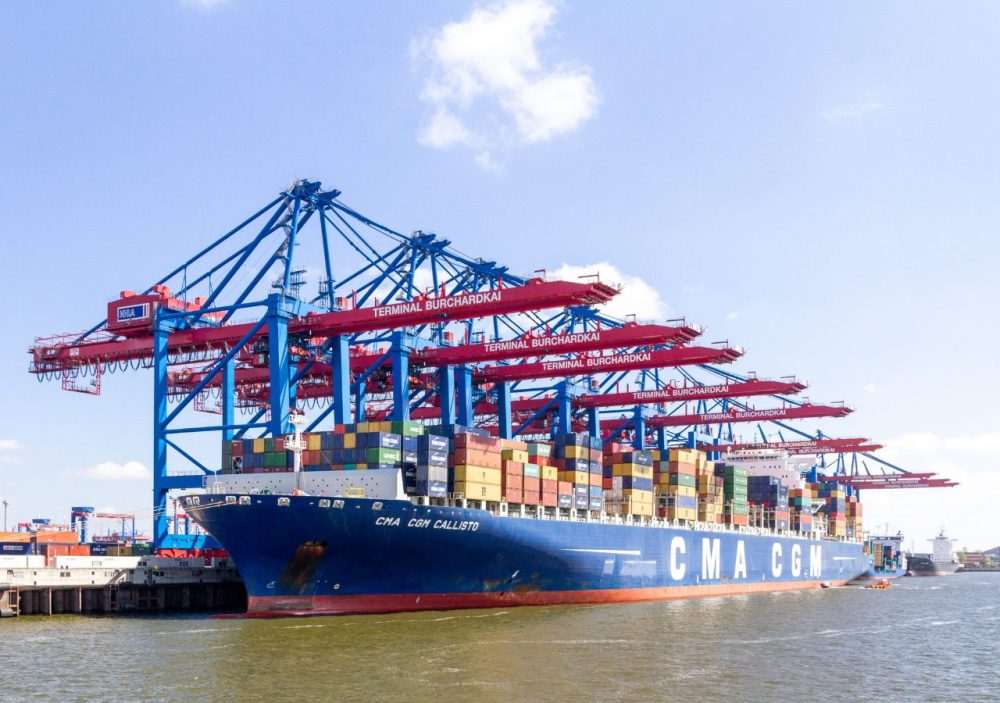
Since early October, consecutive strikes at Port of Rotterdam and Port of Antwerp-Bruges have caused severe congestion, disrupting shipping schedules to and from Europe. Dozens of container vessels are currently waiting offshore, putting immense pressure on supply chains and driving up potential delays and costs. Rotterdam: Container Handling at a Standstill On 8 October, lashers at the Port of Rotterdam launched a strike over wage disputes, halting all container loading and unloading operations. Lashers play a critical role in vessel operations, and their absence has brought major terminals such as Maasvlakte II, Delta II, ECT and RWG to a stop. According to the FNV union, all employees from the two main lashing service providers joined the strike. Tugboats and pilots remain operational, but without lashers, containers cannot be secured or released. The strike, initially planned for 48 hours, has been temporarily suspended from 13 October for five days to allow negotiations to resume. If no new agreement is reached, the strike may resume after 17 October. Image source: Reuters – A drone view of containers stacked at the Port of Rotterdam, Netherlands Antwerp-Bruges: Limited Pilot Hours Trigger Major Delays Since 5 October, maritime pilots at Antwerp-Bruges have been staging a “work-to-rule” action to protest pension reforms, restricting operations to 08:00–17:00 daily. This has cut port handling capacity nearly in half — from an average of 60–80 vessels per day to just 31 on 7 October. The backlog has quickly escalated, with more than 60 vessels waiting for berthing slots at Antwerp and Zeebrugge as of 9 October, intensifying pressure on port coordination. Widespread Congestion Threatens Supply Chains Data from Lloyd’s List Intelligence shows that the number of container vessels anchored off Northern Europe has increased fivefold in just a few days. Maersk has warned customers of major disruptions to port calls and vessel schedules at Rotterdam, Antwerp and Zeebrugge. Beyond the strikes, factors such as low river levels, shipping alliance reshuffles and growing transport demand are further straining European supply chains. Vantage Logistics: Flexible Delivery Solutions During EU Port Crisis This wave of strikes and congestion poses a significant threat to time-sensitive cargo and contract-bound shipments. Vantage Logistics advises shippers and consignees to: Plan earlier to secure stable shipping slots. Consider alternative routes to reduce reliance on Northern European ports. Use Air Freight or multimodal solutions for urgent orders to maintain delivery commitments. We stand ready to provide tailored routing options and agile shipment handling to support your EU supply chain during this disruption. Contact Vantage Logistics today to discuss suitable routing and delivery strategies for your Europe-bound cargo.

13/10/2025

View More

Market updates

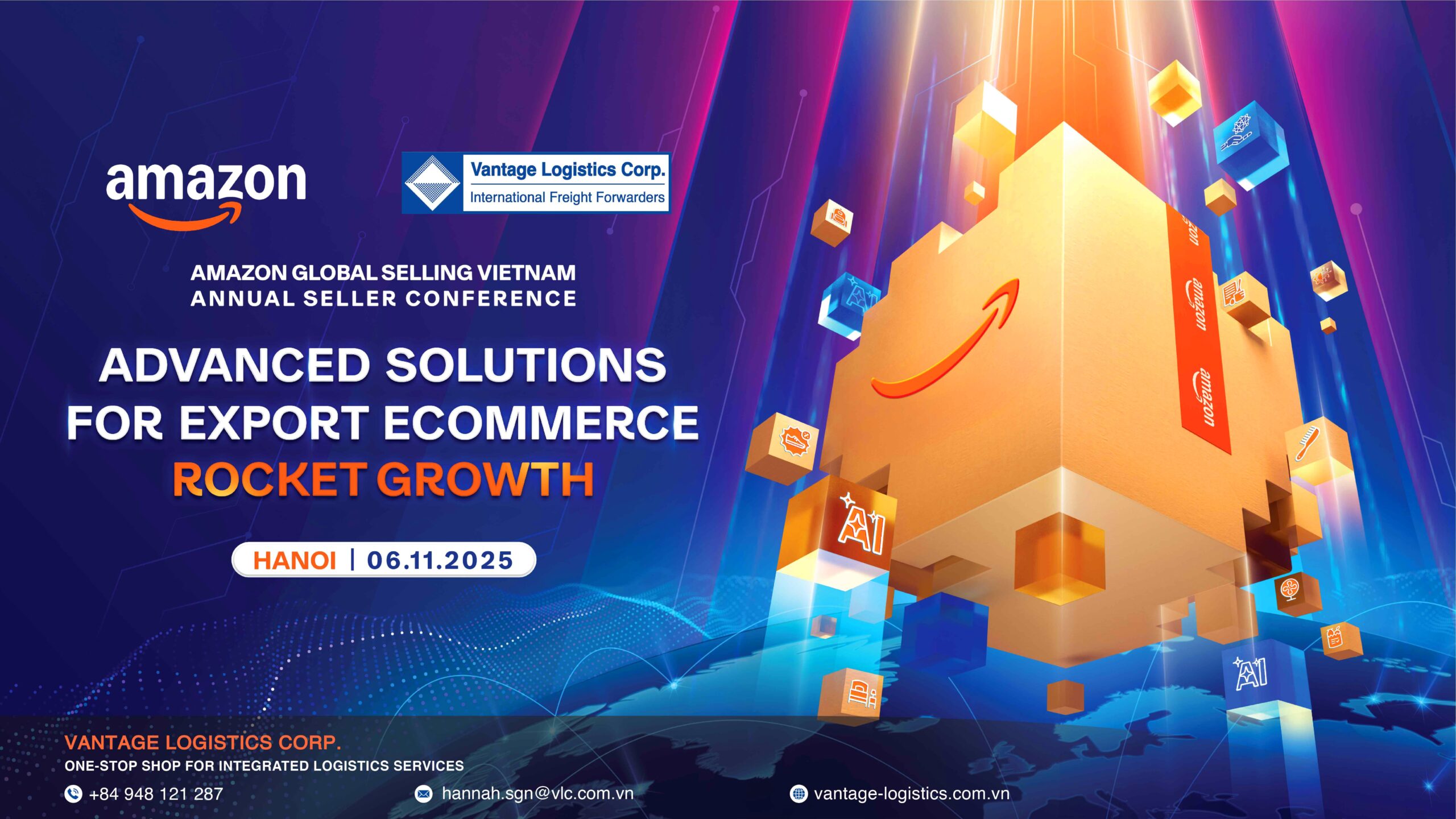
Vantage Logistics Supports Vietnamese Businesses to Expand Exports to the US through Amazon Global Selling 2025

Amazon Global Selling Vietnam 2025: Tech Breakthroughs – Accelerating Global Export Success Driving New Opportunities for Vietnamese Exporters to the United States On 6 November 2025, Vantage Logistics will officially participate in the Amazon Global Selling Viet Nam Conference 2025 – the largest cross-border e-commerce event of the year, held at the Vietnam Exhibition Centre (Hanoi) under the theme “Technology Breakthroughs – Accelerating Global Exports.” The conference is set to gather over 1,500 sellers, 20+ reputable service providers, and 10+ distinguished speakers from Vietnam and abroad. It offers Vietnamese sellers an invaluable opportunity to stay ahead of global e-commerce trends, learn from million-dollar brand success stories, and explore practical logistics and compliance solutions to expand exports through Amazon. With a focus on strategic export destinations such as the United States, the event promises to deliver a comprehensive perspective on the evolution of global e-commerce and new growth opportunities for Vietnamese businesses. Market Context and Export Challenges for Vietnamese Businesses In recent years, many Vietnamese exporters have turned to cross-border e-commerce as a way to diversify export markets and reduce reliance on traditional channels. However, this journey remains challenging. Businesses face numerous barriers, including: Strict regulations on documentation, taxation, and US import standards High logistics costs and long delivery lead times Limited experience in managing and complying with Fulfilment by Amazon (FBA) standards These are the very challenges that Vantage Logistics designed to help Vietnamese businesses overcome key export barriers and succeed in the US market. Vantage Logistics’ Role at the Event As a Vietnam–US logistics specialist with over 23 years of experience, Vantage Logistics joins this year’s conference with the goal of empowering Vietnamese businesses to expand to the US through Amazon. At the event, Vantage Logistics will provide on-site consultation and introduce its comprehensive international shipping solutions for Amazon sellers in Viet Nam. The company will also share practical insights on how to optimise costs and shorten lead times when exporting to the US, including: Amazon-standard FBA & FBM shipping services Optimised cost and time-efficient delivery solutions Consultation on import compliance, documentation, and taxation Special support programme for first-time Amazon exporters Committed to Supporting Vietnamese Exporters Through Amazon Global Selling 2025, Vantage Logistics reaffirms its commitment to being more than just a transport provider – but a strategic partner helping Vietnamese businesses: Optimise cross-border supply chains Strengthen competitiveness of Vietnamese products on global e-commerce platforms Develop sustainable export growth to the US market With careful preparation, long-term vision, and the right logistics partner, Vietnamese businesses can confidently take their place on the global stage with confidence and resilience. Interested businesses can connect directly with the Vantage Logistics team for tailored export consultation and exclusive support programmes. → Vantage-Amazon2025-Register EVENT DETAILS Date: 6/11/2025 Venue: Vietnam Exposition Center (VEC), 3VQ8+24C, Đong Hoi, Đong Anh, Ha Noi Contact: hannah.sgn@vlc.com.vn | 0948 121 287

09/10/2025

View More

Market updates

Summary of Viet Nam Seaport System Capacity 2022

The recent Vietnamese seaport system has been focused on investment with the current scale and technology that reaches internationally, especially the container port system (02 seaports of Viet Nam, Hai Phong, and Ho Chi Minh City are in the top 50 largest container ports worldwide). 1. Viet Nam’s seaport infrastructure As of June 2022, Vietnam’s seaport system currently has 286 ports, distributed in 5 groups of seaports, with a total length of more than 96 km, and infrastructure to meet the throughput of more than 706 million tons per year in 2021. Established gateway ports combining international transshipment in the North and the South; successfully received container ships up to 132,000 DWT at Lach Huyen Wharf (Hai Phong), up to 214,000 DWT at Cai Mep Wharf (Ba Ria – Vung Tau). Table 1: Summary of the current capacity of the Vietnam Port System – Source: Vietnam Maritime Administration (06/2022) Most ports associated with centers and large economic regions of the country have formed large seaports as a focal point for import and export of goods and created motivation to develop the whole region such as: Quang Ninh and Hai Phong associated with the Northern key economic region; Nghi Son, Ha Tinh, Thua Thien – Hue, Da Nang, Quang Ngai, and Quy Nhon associated with the key economic region of the Central region; Khanh Hoa, Ba Ria – Vung Tau, TP. Ho Chi Minh City and Dong Nai associated with the economic zone of the Southeast; Can Tho, Long An, and An Giang associated with the key economic region of the Mekong Delta. 2. Scale and quality of Viet Nam seaport The recent Vietnamese seaport system has been focused on investment with the current scale and technology that reaches internationally, especially the container port system (02 seaports of Viet Nam, Hai Phong, and Ho Chi Minh City are in the top 50 largest container ports worldwide). In 2021, the total amount of goods passed through Viet Nam seaport reached 706.13 million tons, up 2% compared to 2020 in the context of the impact of Covid-19. In particular, exports reached 185.1 million tons, up 4.4%; Domestic goods reached 305.8 million tons, up 6.3%. Particularly container goods reached nearly 24 million TEU, up 7% compared to the previous year. In particular, the volume of goods imported and exported by international transportation of Vietnam’s shipping fleet ship fleet reached a growth rate of 54% (nearly 5 million tons) compared to 2020. The main items of transport on maritime routes travel China, Japan, Korea, Southeast Asia, and some European routes. The volume of goods passed through the seaport in 9 months of 2022 reached 550,2 million tons, up 3.6% over the same period in 2021. Of which export goods reached 134.3 million tons, domestic goods reached 257.5. million tons. Particularly container goods reached 18.9 million TEU, up 2.3% over the same period in 2021. Regarding shipping routes, Vietnam has established 32 routes, of which 25 international transport routes and 7 transport routes Inland, in addition to the inner levels of Asia, the Northern region has exploited two routes to North America; The South has formed 16 train routes away from North America and Europe superior to Southeast Asian countries (only after Malaysia and Singapore). Map 2: Scale of Viet Nam seaport 4. Objectives to 2030 a.       About capacity: Satisfy import-export demand of goods, trade between regions throughout the country, and transshipment and transit goods for countries in the region, as well as domestic and international. The seaport system can handle goods from 1,140 to 1,423 million tons (of which container cargo is from 38 to 47 million TEUs). b.      About infrastructure: Priority is given to the development of international gateway ports, Lach Huyen (Hai Phong), Cai Mep (Ba Ria – Vung Tau). Studying appropriate mechanisms and policies to gradually develop an international transshipment port at Van Phong (Khanh Hoa) to exploit the potential of natural conditions and geographical location. Planning on development orientation of Tran De port (Soc Trang) serving the Mekong Delta so that investment can be deployed when conditions are met; large-scale seaports serving socio-economic development of the whole country or inter-region; large-scale ports serving economic zones and industrial zones; ports in island districts to serve socio-economic development in association with national defense and security and sovereignty over sea and islands. Accordingly, by 2030, according to scale and function, Vietnam’s seaport system will include 5 groups of seaports with 36 seaports, 02 special seaports (Hai Phong, Ba Ria – Vung Tau), 15 seaports of class-I, 06 seaports of class-II, 13 seaports of class-III are expected to meet the throughput of about 1,14 – 1,42 billion tons. In which, the seaports of Thanh Hoa, Da Nang, Khanh Hoa and Soc Trang have the potential to become special seaport.  Map 4.0 of seaport planning 2022-2030 Regarding the orientation of connecting traffic infrastructure, developing railway lines connecting with special-class seaports and class-I seaports on the North-South corridor; to form wharves for inland waterway vessels in seaport waters; highway system connecting with special seaports, national highway system, local roads directly connecting to seaport system. To develop inland ports in economic zones and economic corridors, giving priority to planning locations with favorable connections by inland waterway transport, river and sea transport, expressway, railway to important seaports in the group of seaports Source Vietnam Maritime Administration & Ministry of Industry and Trade — Vantage Logistics provides an integrated chain of comprehensive logistics services: ·         International freight (Sea + Air) ·         Integrated logistics for Food – Agricultural Products – Rice – Frozen Seafood ·         Shipping agency / NVOCC ·         Customs service ·         Warehousing & distribution ·         E-commerce logistics ·         Consulting & Assistance for promoting Viet Nam products to global market Vantage Logistics Corp Phone: +84-28-38267312 – Fax: +84-28-38267313 24/7 Customer service: +84 909 026 261 Website: www.vantage-logistics.com.vn Email: info@vlc.com.vn Head Office: 06.01, Tower A, Rivergate, 151-155 Ben Van Don, District 4, HCMC, Viet Nam...

17/03/2023

View More

Market updates

Viet Nam’s export and import 2022

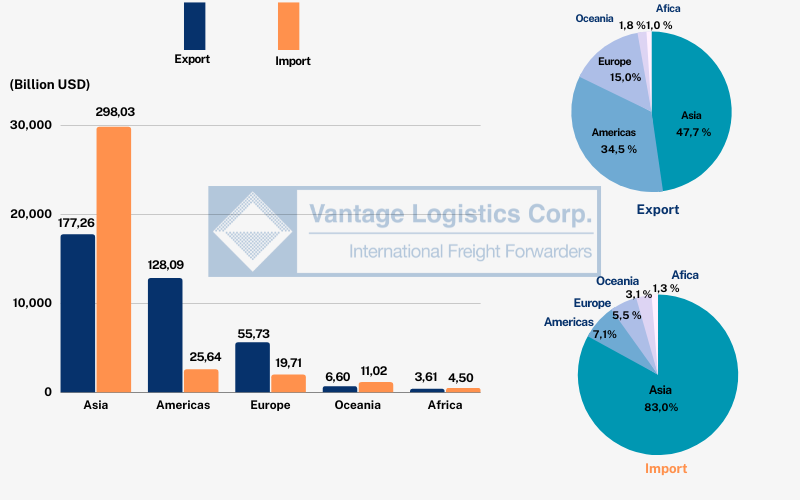
In 2022, Vietnam’s merchandise trade with Asia will reach 475,29 billion USD, up 9,6% compared to 2021, continuing to account for the highest proportion (65,1%) in the total value—import and export of the country. 1.      Overview: In 2022, the total import-export value of Vietnam’s goods reached 730,2 billion USD, up 9,1% (equivalent to 61.2 billion USD) compared to 2021. The export value is 371,3 billion USD, up 10,5%, corresponding to 35,14 billion USD increase over the previous year; import value was 358,9 billion USD, up 7,8%, equivalent to 26,06 billion USD. The balance of trade in goods for the whole year 2022 reached 12,4 billion USD, The General Department of Customs recorded the total import and export value of foreign direct investment (FDI) enterprises in 2022 to USD 506.83 billion, up 9,3% (equivalent to USD 43,22 billion) compared to 2021. The export of goods of FDI enterprises in 2022 of FDI enterprises to USD 273,63 billion, an increase of 11,6% (equivalent to an increase of USD 28,5 billion) compared to 2021. It accounted for 73,7 % of total export value of the country. 2.       Import-Export Market In 2022, Vietnam’s merchandise trade with Asia reached 475,29 billion USD, up 9.,% compared to 2021, continuing to account for the highest proportion (65,1%) in the total value—import and export of the country. The import-export value between Vietnam and other continents is respectively: the Americas: 153,73 billion USD, up 10,5%; Europe: 75,45 billion USD, up 2,8%; Oceania: 17,62 billion USD, up 24,3% and Africa: 8,1 billion USD, down 3,9% compared to 2021. Chart 1: Import and export value by continent, country and some major markets in 2022 – Source: General Department of Customs 3.       ExportIn 2022, the total export value of Vietnam reached 371.3 billion USD, up 10.5%, corresponding to 35,14 billion USD increase over the previous year. Which, other machinery, equipment, tools, and spare parts increased by 7,43 billion USD; footwear of all kinds increased by 6,15 billion USD; textiles and garments increased by 4,82 billion USD; computers, electronic products, and components increased by 4,74 billion USD; seafood increased by 2,04 billion USD. Chart 2: Top 10 export groups of Vietnam in 2022 – Source: General Department of Customs Some main export commodity groups:– Phones and accessories: For the whole year of 2022, the export of phones and accessories of all kinds and components reached USD 57.99 billion, up 0.8% compared to 2021. In this group of goods exported to the Chinese market reached 16.26 billion USD, up 7.1%; to the US market with a value of 11,88 billion USD, up 22,5%; to the EU reached 6,7 billion USD, down 15,1%; to Korea reached 5,05 billion USD, up 5,3%… compared to the previous year. – Computers, electronic products & components: exports of computers, electronic products, and components to the US reached 15,94 billion USD, up 25% over the previous year; to the Chinese market reached 11,88 billion USD, up 7,3%; to the EU market reached 6,87 billion USD, up 4,7%; to Hong Kong market reached 5,88 billion USD, down 6,7%; to the Korean market reached 3,38 billion USD, down 3,1%… – Machinery, equipment, tools and spare parts: The main export markets of this group of goods are: the US with 20,18 billion USD, up 13,3%; EU reached 5,76 billion USD, up 32,2%; China reached 3,68 billion USD, up 28,3%; Japan reached 2,76 billion USD, up 7,6%; Korea reached 2,73 billion USD, up 7%… compared to 2021. – Textiles and Sewing: In the past year, exports of textiles and garments to the US market reached 17,36 billion USD, up 7,9%; to the EU reached 4,46 billion USD, up 34,7%; Japan reached 4,07 billion USD, up 25,8%; Korea reached 3,31 billion USD, up 12,1%… compared to 2021 – Footwear of all kinds: Export of all kinds of footwear to key markets in 2022 increased sharply. Specifically, exports to key markets such as the United States reached 9,62 billion USD, up 29.6%; EU reached 5,91 billion USD, up 45,3%; China reached 1,71 billion USD, up 7,3%… over the previous year. – Wood and wood products: In the past year, the export of wood and wood products to the US market reached 8,66 billion USD, down 1,3%; to China reached 2,15 billion USD, up 43,8% and Japan reached 1,89 billion USD, up 31,4%… over the previous year. – Seafood products: In the past year, seafood export value to the US reached 2,13 billion USD, up 4% (equivalent to 82 million USD); Japan reached 1,71 billion USD, up 29% (equivalent to 381 million USD); China reached 1,57 billion USD, up 61% (equivalent to 598 million USD) and the EU reached 1,3 billion USD, up 21% (equivalent to 228 million USD) over the previous year. – Iron and steel of all kinds: compared with the previous year, the amount of iron and steel exported in 2022 only reached 8,4 million tons with a value of 7,99 billion USD, down 35,9% in volume and 32,2% in quantity value (equivalent to a decrease of USD 3,8 billion). The amount of iron and steel exports in 2022 is mainly to the following markets: ASEAN with 3.55 million tons, down 7.1%; EU with 1.55 million tons, down 15%; United States with 682 thousand tons, down 35%… compared to the previous year. In particular, the export volume of iron and steel of all kinds to the Chinese market was only 99,2 thousand tons, while the number of exports to this market last year was up to 2,63 million tons. 4. Import The total import value of Vietnam’s goods in 2022 reached 358,9 billion USD, up 7,8% compared to 2021. In which, the biggest increase was in computers, electronic products, and components, up 6,33 billion USD, corresponding to an increase of 8,4%; petrol and oil of all kinds increased by 4,86 billion USD, equivalent to an increase of 118,5%; chemicals increased by 1,5 billion USD, corresponding to an increase of 19,6%; coal increased by 2,69 billion USD, equivalent to 60,2%; crude oil increased by 2,61 billion USD, equivalent to 50,1% increase… Chart 3: 10 commodity groups with the highest import value in 2022 – Source: General Department of Customs Some main groups of imported goods:– Computers, electronic products, and components: In general, the import value of this commodity group in 2022 reached 81.88 billion uSD, up 8,4% over the previous year. Vietnam mainly imported this group of goods from the following markets: China reached 24,06 billion USD, up 9,6%; South Korea reached 23,2 billion USD, up 14,3% and Taiwan reached 11,07 billion USD, up 15,1%… compared to 2021. – Machinery, equipment, tools, and spare parts: The total import value of this group of goods in 2022 is 45,19 billion USD, down 2,4% compared to the previous year. China continues to be the largest market supplying this group of goods to Vietnam in 2022 with a value of 24,29 billion USD, down 2,5%; followed by the Korean market with 6,24 billion USD, up 2,1%; Japan with 4,29 billion USD, down 3,8%… over the previous year. – Phones and components: For the whole year of 2022, the import value of this product group reached 21,13 billion USD, down 1,6% compared to 2021. Korea is the largest market supplying these two groups of goods to Vietnam in 2022 with a value of 11,49 billion USD, up 7,1%; followed by the Chinese market with nearly 8,06 billion USD, down 12,7%; Taiwan with 414 million USD, up 13,9% compared to 2021. – CBU cars of all kinds: In 2022, the number of imported CBU cars of all kinds is 173,467 units, an increase of 8,5% compared to the previous year. In 2022, CBU cars of all kinds imported to Vietnam are mainly cars with 9 seats or less with 144,912 units, up 32,1%, corresponding to an increase of 35,185 units; followed by trucks with 17,967 units, down 48,3%, corresponding to a decrease of 16,813 units; Other cars were 9,752 units, down 34,9%, corresponding to a decrease of 5,237 units compared to 2021. Particularly for cars with 9 seats, in 2022, Vietnam only imported 836 units. CBU cars of all kinds imported to Vietnam in 2022 are mainly from Thailand and Indonesia, accounting for 75% of the country’s total imports. In which: 72,671 units imported from Indonesia, up 64,2%; imports from Thailand were 72,032 units, down 10.9% compared to 2021. – Petroleum of all kinds: Import volume in 2022 is 8,87 million tons with a value of 8,97 billion USD, a sharp increase of 27,7% in volume and an increase of 118,5% (corresponding to an increase of 4,86 billion USD) in absolute terms compared to 2021. In which, imported diesel oil reached 4.74 million tons, increased by 1.5% and accounted for 54% of imported petrol and oil of the whole country; imported gasoline volume reached 1.7 million tons, increased 2.3 times and accounted for 21%; imported jet fuel reached 1.46 million tons, increased 2,2 times and accounted for 16% of the country’s petroleum imports. The amount of petroleum imported into Vietnam in 2022, mainly from South Korea, is 3,22 million tons, up 96,3%; Singapore was 1,49 million tons, up 17,7% while imports from Malaysia were 1,42 million tons, down 37,7%… – Iron and steel of all kinds: In 2022, iron and steel imports reached 11.68 million tons, down 5.6% but worth 11.92 billion USD, up 3% over the previous year. The volume decreased but the value increased mainly because the unit price of iron and steel imports in the past year increased by 9,2% compared to 2021 (equivalent to an increase of nearly 86 USD/ton). Vietnam mainly imported iron and steel from the following markets: Japan reached 1,91 million tons, up 1,3%, South Korea reached 1,23 million tons, down 17,7% compared to 2021. volume reached 5,1 million tons, up nearly 2%, For the Chinese market, Vietnam’s iron and steel imports from this market in 2022 reached 5,1 million tons, up nearly 2% over the previous year. Meanwhile, iron and steel exports to this market decreased sharply, reaching only 991 thousand tons, down 96,2% compared to 2021. Source: General Department of Customs — Vantage Logistics provides an integrated chain of comprehensive logistics services: ·         International freight (Sea + Air) ·         Integrated logistics for Food – Agricultural Products – Rice – Frozen Seafood ·         Shipping agency / NVOCC ·         Customs service ·         Warehousing & distribution ·         E-commerce logistics ·         Consulting & Assistance for promoting Viet Nam products to global market Vantage Logistics Corp Phone: +84-28-38267312 – Fax: +84-28-38267313 Website: www.vantage-logistics.com.vn Email: info@vlc.com.vn Address: Room 06.01, Tower A, Rivergate, 151-155 Ben Van Don, District 4, HCMC, Viet Nam...

15/03/2023

View More

Market updates

Vietnam import – export report 2021

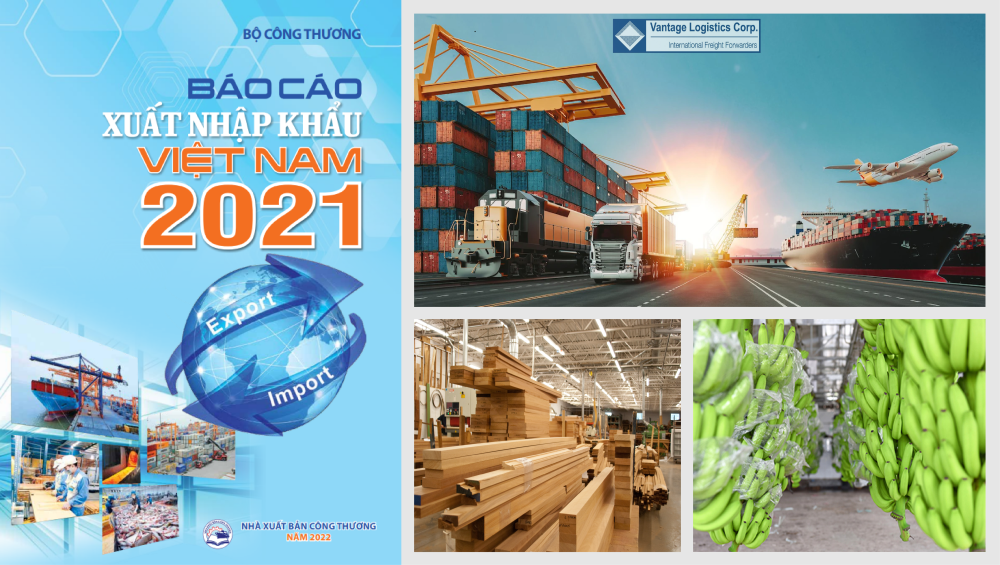
The Ministry of Industry and Trade just released the Vietnam import-export report 2021. This is the official document on the import and export situation of each commodity group, market, some changes in regulations on importing goods of other countries, the management of import and export activities and analysis and forecasts for the next period. Main points in import-export in 2021 In 2021, despite being heavily affected by the Covid-19 pandemic, Vietnam’s import and export activities still reached a record number with a total turnover of 668.55 billion USD, of which exports reached more than 336.3 billion USD, up 19% compared to 2020; imports reached 332.2 billion USD, up 26.5%. Vietnam has exploited incentives from many free trade agreements such as CPTPP, EVFTA, UKVFTA to bring to export growth. Vietnam’s exports increase by 19% in 2021 Some significant changes in 2021: New Zealand has some changes to imported food, and agricultural products to ensure the health of consumers. Developing logistics capacity: Currently, many modern infrastructures, logistics centers, transportation services, warehousing, and forwarding have also been invested, built, and applied advanced technologies, contributing to the smooth disassembly, transportation, and circulation of goods. With a special geographical position, located in a dynamic development area of the world, where the flow of goods is very concentrated and busy, Vietnam is considered to have advantages in geo-economics that are very convenient to promote production, import-export, and logistics services. The detailed Vietnam import – export report 2021 (in Vietnamese) is attached herev...

24/05/2022

View More

Market updates

Vantage Is Proud to Accompany Investors to Bring Solar Power to Viet Nam.

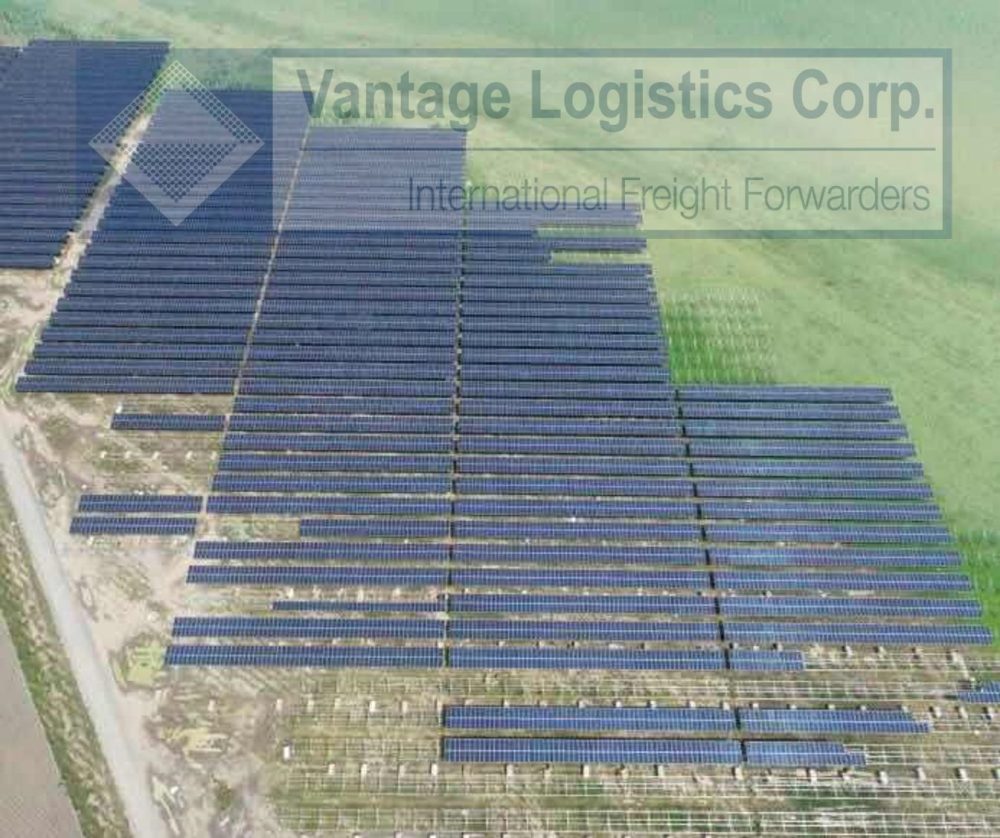
In Viet Nam, the investment in renewable energy, particularly wind and solar power plants, is being encouraged by the Government with favorable policies and incentives. Of which, solar power is being high interested by investors when a lot of policies of investment incentives, especially FIT policies for projects which come into operation before June 2019 issued by the Government. As of the end of 2018, total capacity of newly registered solar power projects amounted to more than 11,000MV, focusing mainly in the central highlands and southeastern provinces, in which, solar power projects in Tay Ninh province such as Dau Tieng 1 & 2, or TTC 1 & 2 are considered as the first major projects to launch the explosion of solar power in Vietnam. However, besides advantage incentive policies by the Government, it is a real challenge to match the project time frame, and a reliable logistics partner is one of the key factors to overcome this challenge. Solar power projects are large in volume and high in time pressure, jobsites are far away and at some, the investors even don’t have enough time to do proper grounding for safe delivery, if the logistics company is not capable, it is easily incurred cost and delay. Vantage did well fore-casting and good preparation from human resources, finance, equipment to subcontracts to ensure the best quality of logistics services for solar power plant customers. Typically, Dau Tieng 2 project (240MW) starting construction in June 2018, Vantage is strategic logistics partner, covering international shipping, master list application, customs clearance, delivery from port of arrival to job site at Tay Ninh province, supervision and unloading goods. The total volume of whole project is up to 5,000teus, continuously imported to Vietnam during the period from September 2018 to May 2019. There were sometimes hundreds of containers arrive together. Vantage project delegation had to work over weekend and holidays to ensure fastest customs clearance and delivery to and minimize detention cost and optimize time frame. Besides, other solar power projects such as TTC 1 & 2 (Tay Ninh); Xuan Tho 1 & 2, Tay Hoa (Phu Yen); Ham Thuan (Binh Thuan); Cam An Nam, Cam An Lam (Khanh Hoa); AMI BMT (Dak Lak)… Vantage Logistics also optimized the time and cost. Peak season, holidays are the tough time when demand is much higher than supply, many projects are thirsty of labor and transportation equipment, yet thanks to well preparation, Vantage have our back-up plan, even transportation subsidies to ensure trucks availability to match time frame. Besides our business ethic and reputation, the strong believe that solar power plants will deliver green energy for sustainable development of our country also push us forward to great efforts to achieve the jobs professionally and timely....

13/05/2019

View More

Market updates

The New Regulation On Tariffs Of Wind Power Projects

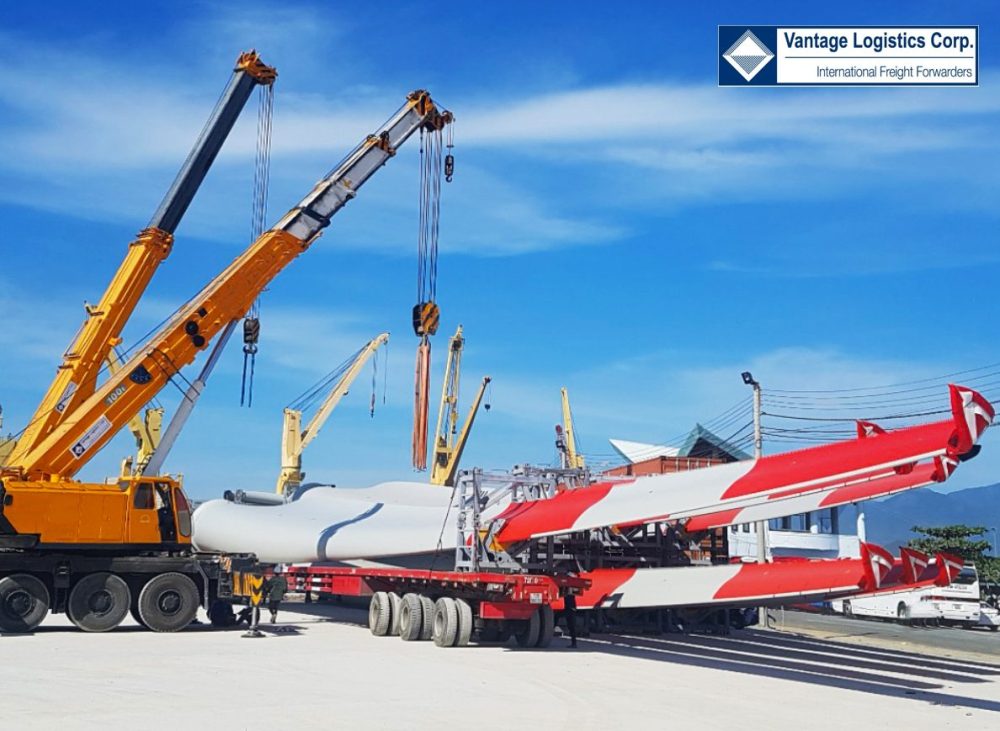
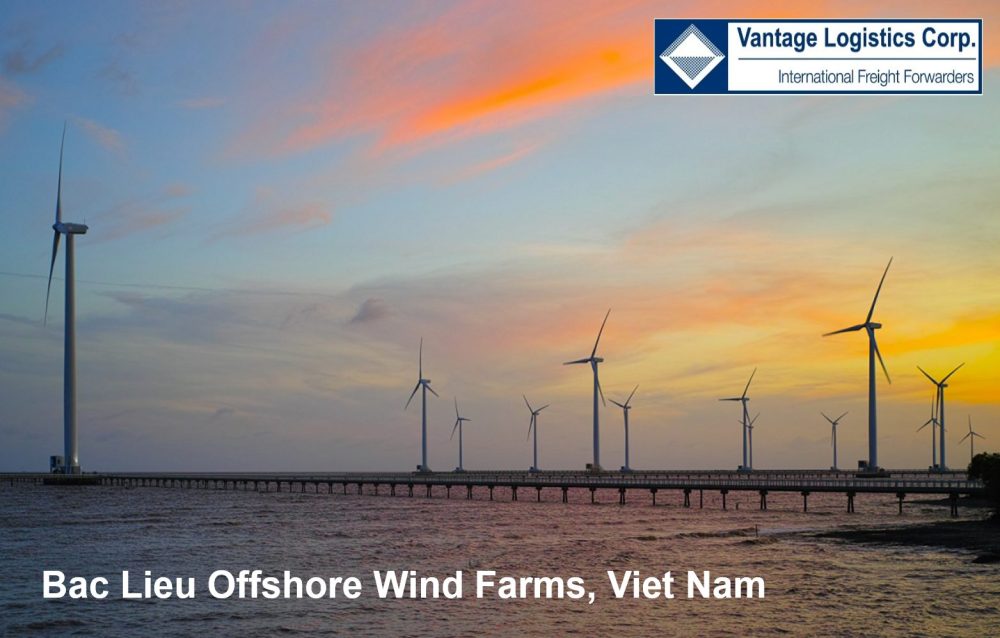
New regulation on tariffs of wind power projects came in to force  The Prime Minister of Vietnamese Government has issued the Decision No 39/2018/QĐ-TTg dated 10/9/2018 for adjusting and supplementing a number of articles of the Decision No 37/2011/QĐ-TTg dated 29/6/2011 on the policy to support the development of wind power projects in Vietnam. The Decision regulates that the buyer is responsible to buy all electricity from the wind power projects at the  point of electricity delivery with the new tariff as follows: The tariff of 1,928 VND/kWh (equivalent to 8.5 UScent/kWh) for on-shore wind power projects The tariff of 2,223 VND/kWh (equivalent to 9.8 UScent/kWh) for off-shore wind power projects This is the tariffs excluding VAT with the average exchange rate as 22,683 VND/1USD announced by Vietnamese State Bank at 30/8/2018 and adjusted by the fluctuation of exchange rate  VND/USD. The cost of purchasing electricity from wind power projects is calculated and included in the input parameters of the electricity price scheme of the Electricity of Vietnam. The above electricity tariffs are applied to a part or whole of the grid connected wind power projects with commercial operation date before 1 November 2021 for 20 years from the date of commercial operation. For the wind power projects commercially operated prior to issuing Decision No. 39/2018/QD-TTg dated 10/9/2018 the above electricity tariffs will be applied  from 1 November 2018 for the remaining period of signed PPA.   The wind power projects have been applied for these electricity tariffs will be not subject to the price mechanism applicable to the electricity generation of the project according to other current regulations.    Besides, Decision No. 39/2018/QD-TTg also amended the conditions for starting construction of wind power, accordingly, the investors are only allowed to start construction of wind power projects when they meet the conditions for project construction start in accordance with the law on construction, and have the PPA signed with electricity Buyer and grid connection agreement with a Power Distribution or Power Transmission company, and wind data report for a continuous period of minimum 12 months.Source: Vietnam Government Portal – MoIT...

11/09/2018

View More

Market updates

Opportunities In The Waste-To-Energy Sector In Vietnam

Waste-to-energy sector Currently, Viet Nam annually generates over 28 million tonnes of waste, with 76% of it being disposed in landfills. Waste-to-energy solutions can not only process solid wastes but also generate energy. Viet Nam can produce around 1 billion kWh in 2020, and 6 billion kWh in 2050 from waste. The government has set targets for the collection, reuse, and recycling of waste. By 2020, it aims to collect and treat 90% of urban solid waste, with 85% of it being recycled and reused. ​Growing energy demandEnergy demand in Viet Nam is predicted to grow over 10% by 2020, and another 8% by 2030. To manage the growing demand, the government has implemented numerous policies in the clean energy sector in the past five years, including those focusing on waste-to-energy solutions. The potential for energy generated from biomass and solid waste is around 2000 MW and 320 MW respectively. However, current installed capacity is much less at 352 MW and 2.4 MW for biomass and solid wastes respectively. Major waste-to-energy projects In February 2018, the Asian Development Bank and China Everbright International Limited signed a US$100 million loan agreement to construct waste-to-energy plants in Mekong Delta, that will not only treat solid wastes but also supply electricity to the national grid. It is the first public-private partnership project in the sector.Last year, in April 2017, Viet Nam’s first industrial waste-to-energy plant was set up in Ha Noi, with equipment from Japan’s Hitachi Zosen Corporation. It can process 75 tonnes of waste per day and generate 1.93 MW of energy. A total of US$29 million was invested in the project, with US$22.5 million being non-refundable aid from Japan’s New Energy and Industrial Technology Development Organization (NEDO), a governmental organization that focuses on research and development of industrial technology in new energy solutions. In the same month, the Go Cat plant became operational in Ho Chi Minh City, which has already treated 500 tons of industrial waste and generated seven megawatts for the national grid. Future projects are focusing on increasing the number and capacity of waste-to-energy plants in Hanoi, Ho Chi Minh City, and Mekong Delta. Some of the major investors include Hitachi Zosen Corporation, Watrec Ltd, and Trisun Green Energy Corporation. Opportunities Viet Nam plans to reduce greenhouse gas emissions by 5% by 2020, 25% by 2030, and 45% by 2050. With the rise in urbanization and electricity consumption, clean energy offers an environmental-friendly solution to meet the growing demand. Local firms lack the technical expertise and capital, and this presents an opportunity for investors. Some of the opportunities are in: Machinery/Equipment – collection and sorting equipment, waste processing equipment, and incinerators; Technical expertise – processing and recycling technologies, waste management solutions, plant design and engineering solutions; Funding and financing – investing capital in upcoming and existing plants, and working with engineering firms and municipal governments. Logistics consultant, shipping and logistics services to project owners, EPCs, vendors Government policies The Viet Nam government has implemented numerous policies for domestic as well as foreign firms involved in waste-to-energy projects. The major regulations are mentioned in Decision 31/2014/QD-TTg, Circular 32/2015/TT-BCT, and Decree 118/2015/ND-CP. Decision 31 – stipulates the supporting mechanism or development of power generation projects using solid waste; Circular 32 – deals with the development of grid-tied generation projects using solid wastes and provides a model electricity sale contract for projects using solid wastes in Viet Nam; and Decree 118 – deals with investment incentives and schemes in various sectors including construction of concentrated solid waste treatment zones and collection, treatment, recycling, and reuse of waste. The feed-in-tariff for power generation projects using solid waste is 10.05US cents per kWh (direct burning) and 7.28 U.S. cents per kWh (burning of gases from landfills). Incentives include tax holidays, exemption of import duties for equipment, land rent exemptions, and low-interest loans. Conclusion Although the potential of solar and wind energy is much higher than solid wastes in Viet Nam, waste-to-energy projects have a two-fold benefit: It helps in generating energy and the processing of waste, which has grown exponentially in urban Viet Nam....

06/08/2018

View More

Market updates

Automotive Industry In Vietnam – The Need Of Supporting Industries

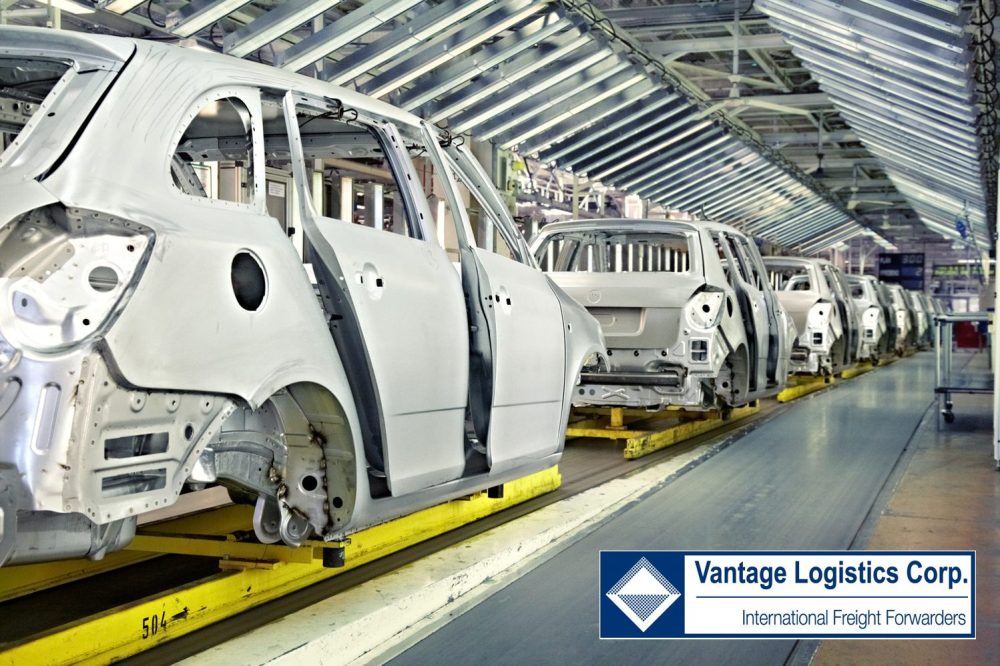
Automotive Industry In Vietnam: Viet Nam today is emerging as one of the most potential consumer markets in the world, although the car ownership rate of the Vietnamese people is quite low – only 23 vehicles per 1,000 people, while the equivalent in Thailand is 204 vehicles per 1,000 people, and the minimum in developed countries is 400 vehicles per 1,000 people. However, with rising incomes, estimated at more than US$3,000 per head by 2021, combined with increasingly improved infrastructure and attractive demographic characteristics, it will be the premise for the Vietnamese automobile market’s purchasing power, which is expected to grow strongly in future. 2017 272,750 vehicles were sold, down 10% compared to 2016. Segment wise, passenger, commercial, and special-use vehicles decreased by 15%, 2%, and 12% respectively. Sales of imported cars grew by 9%. Domestically assembled cars decreased by 19%. Car manufacturers had predicted the decrease in sales, as consumers were waiting for car import tariffs to reduce to 0% in early 2018, in line with the tariff schedules of ASEAN Trade in Goods Agreement. 2018 In the first five months in 2018, 103,746 vehicles were sold, down 6% compared to the same period last year. Segment wise, sales of passenger cars grew by 6% while commercial and special-purpose vehicles declined by 19% and 37% year-on-year respectively Sales of imported cars decreased by 46% while domestically assembled vehicles grew by 10% during the same period. By the end of 2018, overall sales are predicted to grow by 6.8% year-on-year, including commercial and passenger cars The 46% decline in sales of imported cars was due to the delay by manufacturers in fulfilling conditions and procedures of Decree No.116/2017/ND-CP (Decree 116), which stipulated conditions on production, assembly, import, warranty, and maintenance of vehicles. In the first two months of 2018, no units were imported into Vietnam. Post-2018 Growth And Potential Between now and 2025, the domestic automobile manufacturing industry is predicted to grow by 18.5%, and 13.5% between 2025 and 2035, with output reaching 531,600 units by 2025 and 1.76 million units by 2035. Car sales are predicted to grow 22.6% by 2025, and 18.5%, after 2025. The double-digit growth in production and sales are largely based on the growth in the middle class, GDP, and disposable income. With the current passenger vehicle density in Vietnam at 16 per 1,000 people, which is much lower than Thailand, Malaysia, or Indonesia, there is ample room for growth in the industry Need for supporting industries In order to attract investment from domestic and foreign manufacturers, enterprises have proposed to reduce import tax on raw materials for component manufacturers in Vietnam. In the long-term, Vietnamese Government will have mechanisms and policies to attract investment from multinational corporations to invest in large-scale projects in Vietnam. Particular focus is on brands and vehicles that do not have production centers in ASEAN, in order to facilitate the participation of domestic firms in the multinational automobile chain  Vietnam Automotive Industry Highlights VinFast Manufacturing and Trading Company, a member of property developer Vingroup, partners with global auto part suppliers. The company has allocated 70ha of land to Phase 1 of the project in the north of Hai Phong city for part supplies and supports maximum efforts in infrastructure and implementation procedures. These are the parameters that prove the company will have a large demand for components and spare parts and establish long-term international partnerships. According to industry representatives, with the vision of large-scale production and international standards, VinFast will have many potential customers. Some suppliers have expressed their desire for a long-term cooperation with VinFast through setting up of component factories in the project complex in Hai Phong...

23/07/2018

View More

Market updates

The Age Of Renewable Energy

VLC Energy News – July 2018 Renewable Energy In Vietnam Vietnam is among the emerging renewable energy markets in South East Asia, offering many opportunities for investment in clean energy, in particular, wind and solar. The country has a population of 95.5 million and its energy demand is forecasted to grow by 13% annually over the next four years with an energy policy that includes renewables in the mix. According to the country’s revised Power Development Master Plan VII, Vietnam needs investment in the power sector amounting to $150 billion for the period up to 2030 in order to keep up with the nation’s annual growth of 10-12%. The renewable energy sector is considered a priority for investment with contributions set at 7% by 2020 and 10% by 2030New Regulatory Framework to Bolster Growth of Vietnam’s Solar Energy Sector From October 2017, the circular No. 16/2017/TT-BCT of the Ministry of Industry and Trade (MOIT) on the Development of Solar Power Projects and the Power Purchase Agreement Form Applicable to Solar Power Projects officially came into force. CREATOR: gd-jpeg v1.0 (using IJG JPEG v62), quality = 100 Incentives for Investors This FIT rate of 9.35 US cents/kWh (excluding VAT) for grid-connected solar power projects is available for 20 years to projects which reach commercial operation before 30 June 2019. Any residual electricity generated by rooftop solar projects will be purchased by EVN at the same FIT for a 20 year term, provided that the project reaches commercial operation before 30 June 2019. Solar project investors will benefit from tax exemptions on raw materials and supplies imported for project purposes, corporate income tax relief, and an exemption from land rental fees within the first three years of commencing commercial operation. Industry Highlights Vietnam’s biggest solar power plant built in Ninh Thuan The construction of Vietnam’s biggest solar power plant with capacity of 168 MWp and total investment of roughly 4.4 trillion VND (US$194 million) commenced in the south central province of Ninh Thuan, which covers 186 hectares in My Son commune, Ninh Son district. Once operational in June 2019, the plant will supply over 200 million kWh of electricity to the national power grid annually. Ninh Thuan receives special attention from investors as it has big advantages for renewable energy development with the average wind speed of 7-8m/s and 2,800 hours of sunshine every year This plant is the fourth of its kind to start construction in Ninh Thuan this year. It is expected to provide electricity for nearly 200,000 households and generate jobs for over 200 local workers. Local authorities asked the investor to speed up the implementation of project and ensure quality, labour safety, and environmental sanitation. Besides, they pledged to create the most favorable conditions according to legal regulations to support the investor to put the plant into operation as scheduled, he affirmed.Quang Tri approves two wind, solar power projects The provincial authorities signed decisions approving two wind and solar power projects with total investment of over 2.7 trillion VND (US$120 million). Under Decision No.1250/QD-UBND, Tan Hoan Cau Corporation was allowed to carry out Huong Hiep 1 wind power plant project in Huong Hiep commune, the mountainous district of Dakrong. The central locality is calling for investment in 17 solar power projects with a total capacity of more than 930MW to be built on about 1,400 ha. With 12 wind turbines, the plant has a total capacity of 30MW, generating more than 126 million kWh of electricity per year on a site of nearly 8ha. The project costs over 1.55 trillion VND, valid for 50 years. The plant is being built from June 2018 to December 2020.  Under Decision No.1247/QD-UBND, the Licogi 13 JSC was allowed to build LIG-Quang Tri solar power plant in Gio Hai and Gio Thanh communes, Gio Linh district with a designed capacity of 49.5 MWp, generating 67,960 MWh of electricity each year. Costing 1.2 trillion VND, the project will be implemented from June 2018 to June 2019, using 58ha of land. Tay Ninh draws over 14.3 trillion VND in solar power projects The southwestern province of Tay Ninh has granted investment licenses to five solar power projects worth over 14.3 trillion VND (US$629.9 million) in Duong Minh Chau and Tan Chau districts. The plants with a combined capacity of 560 MWp will be built on 20,620 hectares in the area of Dau Tieng reservoir. Their construction is set to commence at the end of this year. The Dau Tieng 1 and 3 solar power plants are designed with the same capacity of 150 MWp and have respective investment of over 3.9 trillion VND (US$171.7 million) and 3.6 trillion VND (US$158.5 million). The Dau Tieng 2 solar power plant worth over 4.9 trillion VND (US$215.8 million) has a capacity of 200 MWp. Three projects were invested by Dau Tieng Tay Ninh Energy Joint Stock Company. The other projects were invested by Tri Viet Tay Ninh Joint Stock Company and Bach Khoa A Chau Tay Ninh Joint Stock Company with the same capacity of 30 MWp and investment of over 760 billion VND (US$33.4 million).In recent years, the Dau Tieng reservoir has played an important role in providing water for agriculture, industry and local daily activities. It holds great potential for solar energy production. Conclusion According to the Government’s targets, solar power is expected to become the main renewable energy source in the future, with installed capacity to be increased from 6-7 MW by the end of 2017 to 850 MW by 2020 (1.6% of the country’s power generation) and 12,000 MW by 2030 (3.3% of the country’s power generation). Vietnam is among countries that enjoy the most sunlight in the world, with the Central Highlands and south central regions recording between 2,000 and 2,600 hours of sunshine every year, reported the Vietnam Clean Energy Association. Average solar radiation is 150 kcal/sq.m, about 2,000 to 5,000 hours per year....

09/07/2018

View More

Market updates

U.S Steel Tariffs On Viet Nam And Its Opportunities

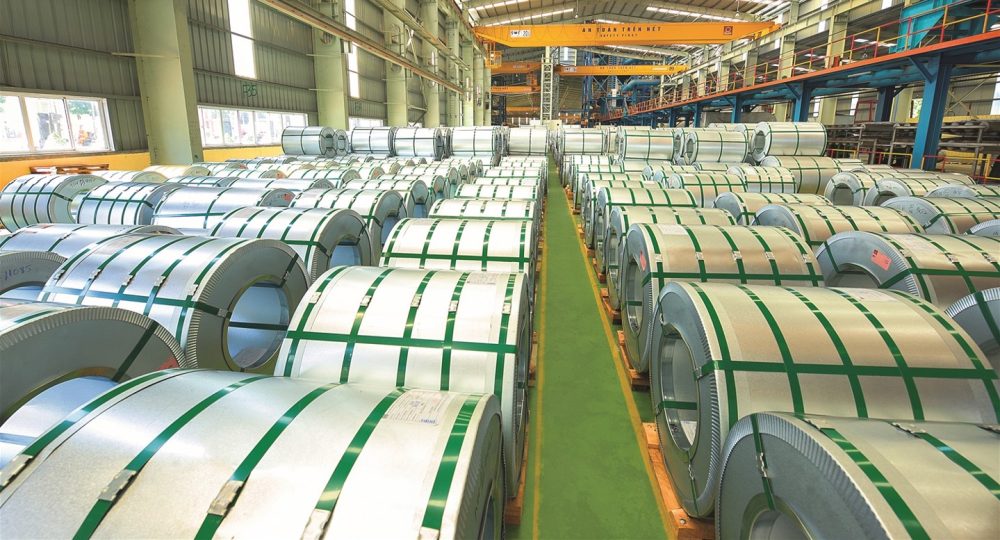
U.S Steel Taffis On Viet Nam: Its Impact And Best Practices  From May 2018, U.S imposed a 25% tariff on steel imports and a 10% tariff of aluminum imports under Section 232 of the Trade Expansion Act of 1962 citing national security issues. Commerce Department increased import duties on steel products specifically from Viet Nam which originated from China as they evaded anti-dumping and anti-subsidy rules. Viet Nam ranks as the 12th largest exporter of steel to the U.S, the rise in tariffs will impact its steel industry. Vietnam – U.S steel trade U.S, the second largest steel export market for Viet Nam after ASEAN, accounted for 11.1% of the total steel exports in 2017. However, steel imports from Viet Nam accounted for only 2% of the total U.S imports in 2017. 2017 exports The top three exports from Viet Nam to the U.S. are the cold-rolled coil (CRC), hot-dipped galvanized coil (HDG), and other metallic-coated coils. CRC exports grew from 33,199 tonnes in 2015 to 155,169 tonnes in 2017, while HDG’s volumes grew from 292 tonnes in 2014 to 124,799 tonnes in 2017. Other metallic-coated flat steel exports grew from 181 tonnes in 2013 to 130,440 tonnes in 2017. 2018 exports In the first two months of 2018, Viet Nam steel exports to the U.S doubled compared to same period last year to 124,600 tonnes worth US$104.2 million. Impacts According to new tariff, corrosion resistant steel (CORE) from Viet Nam, which originated in China, will face anti-dumping duties of 199.43% and countervailing duty duties of 39.05%. Cold-rolled steel imports will face anti-dumping duties of 199.76% and countervailing duties of 256.44%. The rise in tariffs will affect the local manufacturers, but the impact on the overall economy will be minimal. In 2017, the U.S accounted for 11.1% of Viet Nam’s steel exports, but steel accounted for less than 2% of Viet Nam’s total exports. However, the tariff rise will increase competition for local firms, especially in the domestic market. Conclusion With the rise in U.S tariffs, Vietnamese firms will need to diversify its export markets and product portfolio to minimize losses. Moreover, local firms have to invest in technology, increase their product quality, and reduce production costs if it wants to access new markets or support domestic industries. Best practices while exporting to the U.S. With the new tariffs in place, exporters and importers should take certain measures to avoid unnecessary penalties. – Ensuring the HS classification is correct: Exporters and Importers should be clear about the HS classification codes that a product has in the U.S, as U.S customs sometimes inquire about the technical details and manufacturing process to ensure that the correct HS codes are applied. – Declaration of the customs value: Parties need to thoroughly check the contracts, purchase orders, and invoices to ensure that the customs value declared is correct to avoid attracting civil customs penalties. – Avoid transshipment. Opportunities To U.S Market Actually, Viet Nam is a not major market for US steel and aluminum imports (less than 2% of total U.S steel import volume). Although the rise in tariffs will impact the steel industry in Viet Nam, but Vietnamese economist believe that, it will not have a major effect on the overall economy.  Besides, this impact may lead to a result that Vietnamese firms will focus on other sectors which have higher export value and strong growth in U.S market, such as: footwear (12.79%), textiles (8.85%), seafood (8.16%), coffee and tea (8.01%), wood products (3.27%)… To Other Markets (AU/EU/ASIA…) According to Viet Nam Steel Association (VSA), the major export markets for Vietnamese steel are ASEAN, EU, South Korea, India, Taiwan, and Australia. With the U.S tariffs in place, local firms have an opportunity to focus on the other  markets to offset the reduction in U.S exports.  With numerous FTAs already in effect, and FTAs such as the European Union-Viet Nam Free Trade Agreement (EVFTA) and Comprehensive and Progressive Agreement for Trans-Pacific Partnership (CPTPP) currently  under ratification, Viet Nam will have increased access to new markets. According to the World Steel Association, steel demand will continue to grow globally in 2018 and Vietnamese firms would focus on the new markets that will open up once the all the FTAs are in place. Growth in Steel Demand EU: 1.4% Other Europe: 5.2% NAFTA: 1.2% CIS: 3.8% Central and South America: 4.7% Africa: 3.3% Middle East: 4.8% Asia: 1.2% ASEAN: 6.8% Vantage Logistics In Action In order to quick response with market’s rapidly changing, and offering the most optimized logistics solutions  as well, Vantage Logistics has built up a dedicated and well-trained team of highly experienced and professional individuals, facilities, technology, processes, policies… to meet every single need of clients and partners. Our tailored logistics solutions: International Air Freight International Sea Freight Project Logistics Ship/NVOCC Agencies Customs Brokerage Warehouse & Distribution E-commerce Logistics Consulting & Assistance, and more. Contact us: cindy-vn@vantage-logistics.com.vn...

02/07/2018

View More
1 2 3 4